PHOTO
The mail box at ‘Coolringdon’ is covered in tinsel and other Christmas decorations, a sign there are some ‘little people’ again in residence at the historic Monaro property.
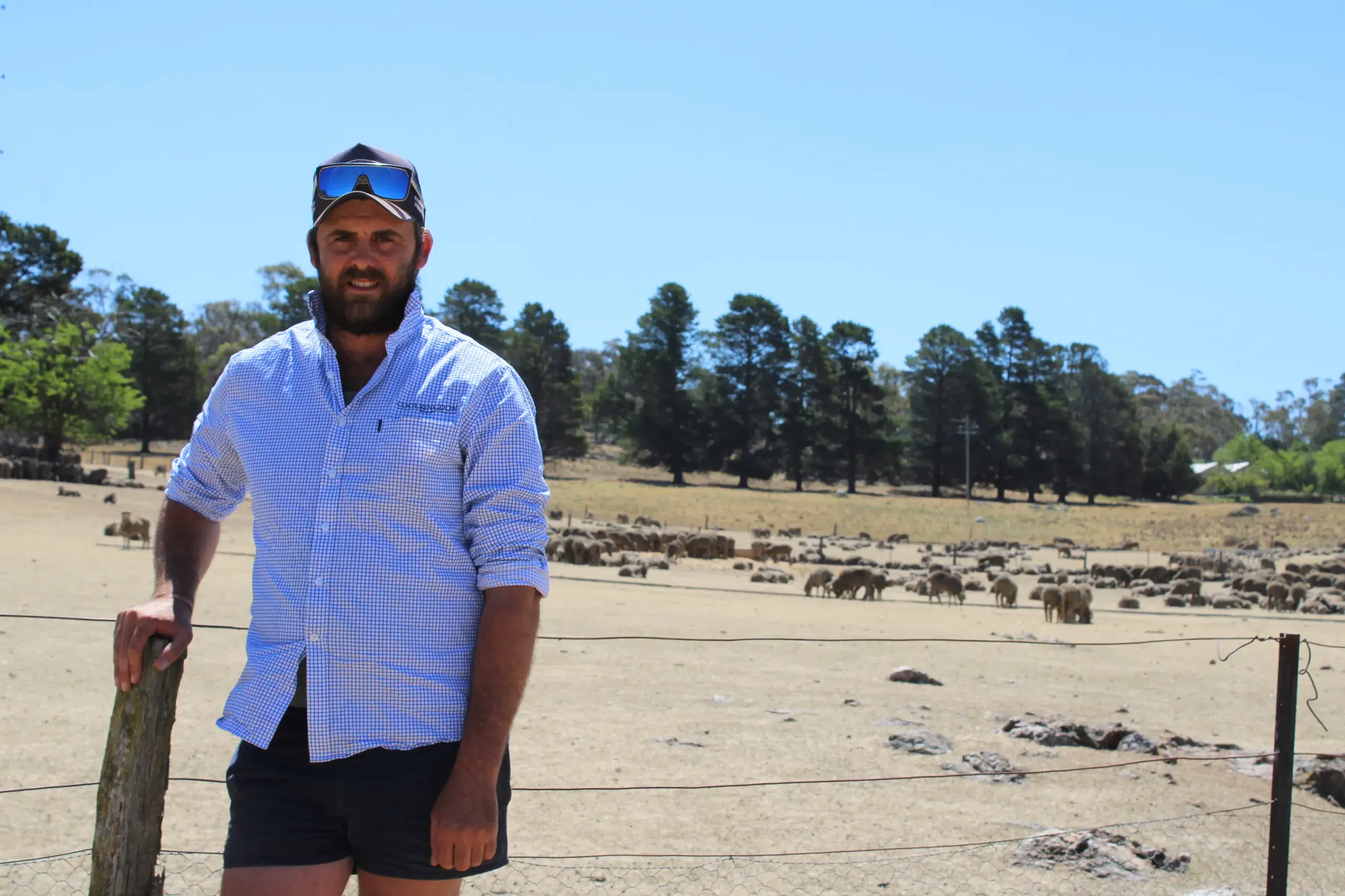
Hamish Hull, his partner, Maisie Ward, and their two young boys, George, two, and Wilbur, nine months, moved into the manager’s residence at ‘Coolringdon’ mid-2025.
After some initial advice and assistance from former long time manager, Malcolm Pearce, Hamish and his family are loving life at ‘Coolringdon’.
“It’s close to town and a perfect place to bring up our boys,” he said.
“It’s really good to be a part of the place.”
Hamish, 32, grew up on a horse stud at Cootamundra.
He began focussing on farming as an occupation when he was 23, gaining experience in different and remote parts of Australia, including South Australia and Western Australia, and also locally at Myalla for five years where he was overseer.
“I just always loved farming,” Hamish said.
“I managed Madura Plains for a year in WA, and then came home.”
Madura Plains Station was a stepping stone for being the successful applicant for managing ‘Coolringdon’, Hamish said.
“It was a really great experience, but being so far away from family and friends was tough, especially with Maise at home on her own a lot as on big days I’d be gone for over 12 hours at a time,” he said.
Madura Station occupies an area of approximately 7082 square kilometres (1,750,000 acres) in the remote south east of Western Australia and is the second largest sheep station in Australia. Considered one of the most productive sheep stations in WA, the last shearing saw 76,000 head of merinos pass through its gates.
Farming for Hamish provides him with a sense of accomplishment at the end of each day.
The fact that as a farmer there is plenty of variety, also makes the job more interesting, he added.
Hamish said he was familiar with the different land management practice used at ‘Coolringdon’ - to put the property first.
With the lack of rain and pasture, ‘Coolringdon’ like most properties on the Monaro has been de-stocking.
“We pretty much de-stocked everything and now have just our new flock [adult sheep] who are in feed containment pens, besides the lambs,” Hamish said.
“There are benefits to taking the stock off the land early to keep the ground cover from going completely bare, and locking sheep up and feeding them.
“When the break in the weather does come, the country responds much quicker and you’re able to get sheep out of the pens and back in the paddocks a lot earlier.”
Hamish said retaining ground cover by locking the sheep in containment lots, as opposed to keeping them in paddocks, avoids excessive hard hoof damage as well as dust and limits livestock from chewing down the grasses.
What’s next at ‘Coolringdon’?
“At the moment it’s just play it by ear as far as what the season’s going to do. I don’t think anybody really knows,” Hamish said.
“We will keep feeding sheep until we get enough rain and enough growth back in the paddocks to get the sheep out of the feed lot, other than that, just splitting a couple more paddocks up and probably a few more paddock improvements and other jobs.”
When conditions improve Hamish expects to build stock back up using their own stock.
“We probably won’t buy stock in, so it’ll take a bit of time to bring it back up,” he said.
Hamish and the family were excited to spend Christmas at ‘Coolringdon’ and hosted the first, of hopefully many, large family Christmas get-togethers at the farm.