
PHOTO
Ski mountaineering, a new Winter Olympic Sport introduced at the Milano Cortina 2026 Games, has a surprisingly strong local connection.
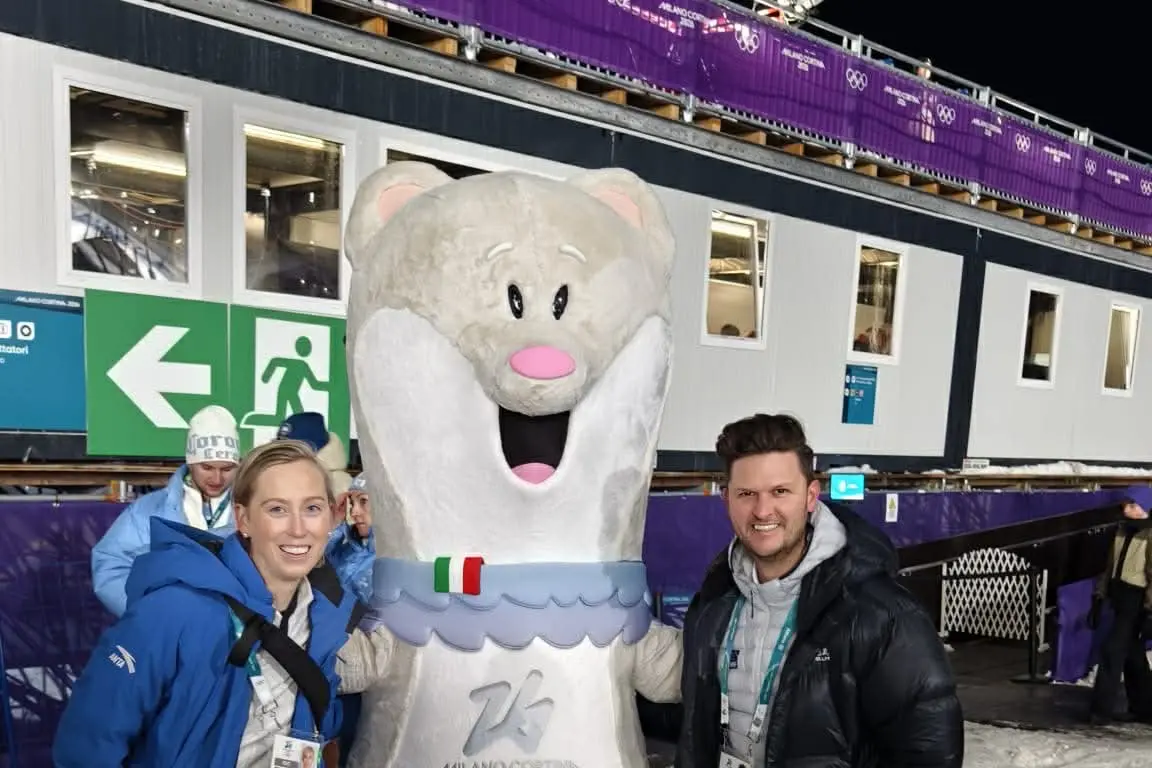
Former Snowy Monaro resident, Ramone Cooper, son of Steve Cooper and Jen Coles, and Ramone's wife, Sarah Burston, are living in Switzerland, with their young son, Lenny. The couple is heavily involved in the Olympics movement, with Sarah working for the International Olympic Committee (IOC) and Ramone working in International Sport in the international ski industry.
They moved to Switzerland in 2018 when Sarah started working with the IOC.
Ramone is now the inaugural Director General of the International Ski Mountaineering Federation.
As a freestyle skier and at one time Australia's number two mogul skier, Ramone competed at the Vancouver 2010 Winter Olympics, although his performance was affected by a major knee injury he suffered three weeks out.
He has an expansive professional background with experience in domestic and, later, international sporting competition and corporate roles.
After Ramone retired from competitive skiing, within a short period of time his skills and qualifications gained him a position on the Australian team at the first Winter Youth Olympic Games in Innsbruck 2012, which, after further similar roles, resulted in becoming chef de mission for the Australian Youth Olympic teams in 2020 at Lausanne and 2024 at Gangwon.
Around this time, he also assisted in the structure of new disciplines of slopestyle and halfpipe and he was a performance coach at the Sochi, Pyeongchang and Beijing Winter Olympics.
His role as head of the International Ski Mountaineering Federation came about when Ramone was asked by Snow Australia to attend an International Ski Mountaineering Federation meeting after the IOC added it to the 2026 Winter Games.
Although he has no experience in ski mountaineering, 37-year-old Ramone, was eventually appointed by the world's skiing governing bodies to head this new winter sport and push for global representation among winter sport athletes.
Since he secured the inaugural role, and IOC funding two years ago Ramone has invested time into building a Switzerland head office, appointing staff, re-developing ski mountaineering's commercial model, in addition to creating broadcast-ready events in the lead-up to Milano Cortina last February.
In the Winter Olympics at Milano Cortina last February, two Australians, Lara Hamilton, and Phil Bellingham, competed in "skimo".
Skimo, which originated in Europe, is a human-powered endurance competition that involves climbing mountains on skis and by foot. In many race disciplines, competitors pass through a series of transitions between uphill skiing and uphill walking, before descending on skis.
The Olympic sport of skimo takes fewer than three minutes at an altitude gain of 70 metres. However traditionally, and on the World Cup Circuit, the skimo events can last hours and are held on courses across high mountains with a large altitude gain making it very aerobic.
"Ski mountaineering's Olympic debut was a defining moment for the sport," Ramone said.
"It's been a long journey to reach that point, so to finally see it on the Olympic stage was something quite special.
"What stood out was how naturally it worked within the Games. The formats are compact and easy to follow, the racing is intense and unpredictable and there's still that strong connection to the mountain environment."
Ramone said the event created a great atmosphere in the venue and made the sport accessible for both spectators and those watching from home.
If it remains on the Winter Olympics program in 2030, Cooper intends to introduce longer events for the athletes competing in this discipline.
"There's a clear sense that the sport has a strong future within the Olympic program.
"It's efficient to deliver, it integrates well in existing mountain venues and it brings something distinct in terms of endurance, technical skill and the outdoor setting," Ramone said.
On a more personal level, Ramone said he was fortunate to play a role in guiding the sport through its Olympic debut.
"It's been a collective effort across many people and organisations, and Milano Cortina really felt like the start of something bigger."
"Looking ahead to the French Alps 2030, the focus is on building on that experience - expanding the program, creating more opportunities for athletes and continuing to refine how the sport is presented," Ramone said.
While The French Alps 2030 organising committee has expressed interest in retaining the sport, particularly following the strong performance of French athletes in the 2026 debut, the final decision on all disciplines, additional sports, and athlete quotas for 2030 will be taken by the IOC in June.