
PHOTO
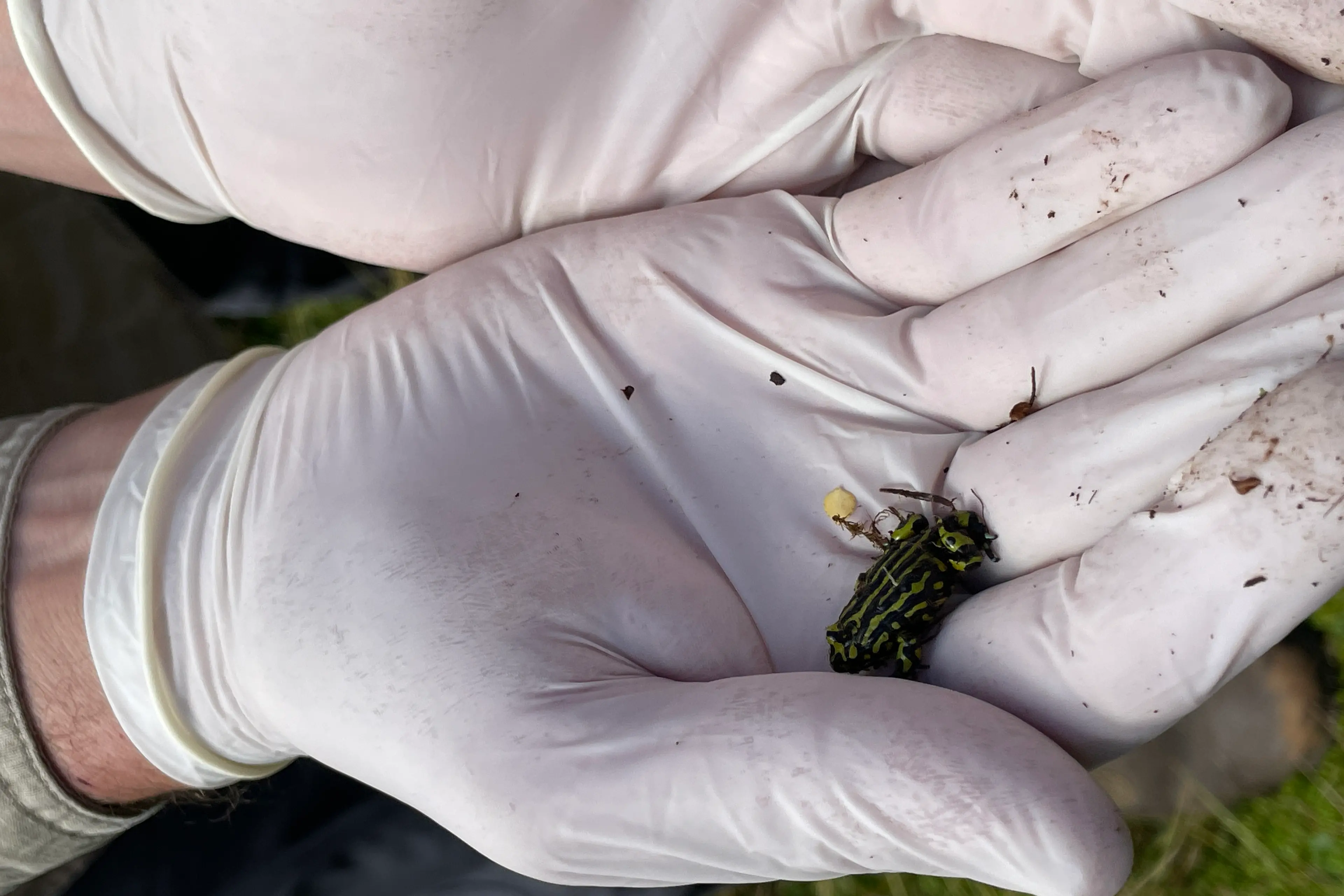
A recent on-ground partnership at Micalong Swamp is helping protect one of the largest remaining wild populations of the critically endangered Northern Corroboree Frog (Pseudophryne pengilleyi).
The Brungle/Tumut Local Aboriginal Land Council (LALC) delivered an event as part of the Future-Proofing Australia’s Alpine Catchments project, funded by the Australian government Natural Heritage Trust and delivered for South East Local Land Services (LLS), a member of the Commonwealth Regional Delivery Partners panel.
LLS joined the Brungle/Tumut LALC, NSW Department of Climate Change, Energy, the Environment and Water, and Forestry Corporation of NSW in March to acknowledge the cultural significance of Micalong Swamp and showcase ongoing habitat restoration efforts.
The site supports approximately 25 per cent of the remaining wild population of the Northern Corroboree Frog, the largest known extant population in the wild.
Listed as critically endangered in NSW and nationally, the species relies on healthy alpine and sub-alpine wetlands for breeding and survival.
“Micalong Swamp is an important cultural landscape for our people,” Uncle Rodney Penrith of Brungle/Tumut LALC said.
“The Northern Corroboree Frog, known to us as Gyak, carries strong cultural meaning and represents our ongoing responsibility to care for country.
“Bringing partners together on country reinforces that shared commitment.”
Blackberry infestations have posed a significant threat to this habitat.
Dense infestations damage vegetation and nesting sites, and heavily shade breeding pools, making them unsuitable for tadpole development.
Since 2016, partners have worked together to control blackberry and restore habitat across the site, with ongoing management planned. Last year, Indigenous rangers treated blackberry across 21 hectares of the swamp.
“The work at Micalong Swamp shows what can be achieved when traditional owners and agencies work side by side,” acting manager Land Services, LLS, Renee Windsor said.
“Through long-term blackberry control and habitat restoration, we are helping protect one of the most important wild populations of Northern Corroboree Frogs and strengthening our commitment to Caring for Country.
“World Frog Day on 20 March shines a spotlight on species that need ongoing support.”