
PHOTO
A study of Bogong moths migration patterns will be conducted in the Snowy Mountains next month by Invertebrates Australia, in partnership with Western Sydney University, Zoos Victoria, and Lund University.
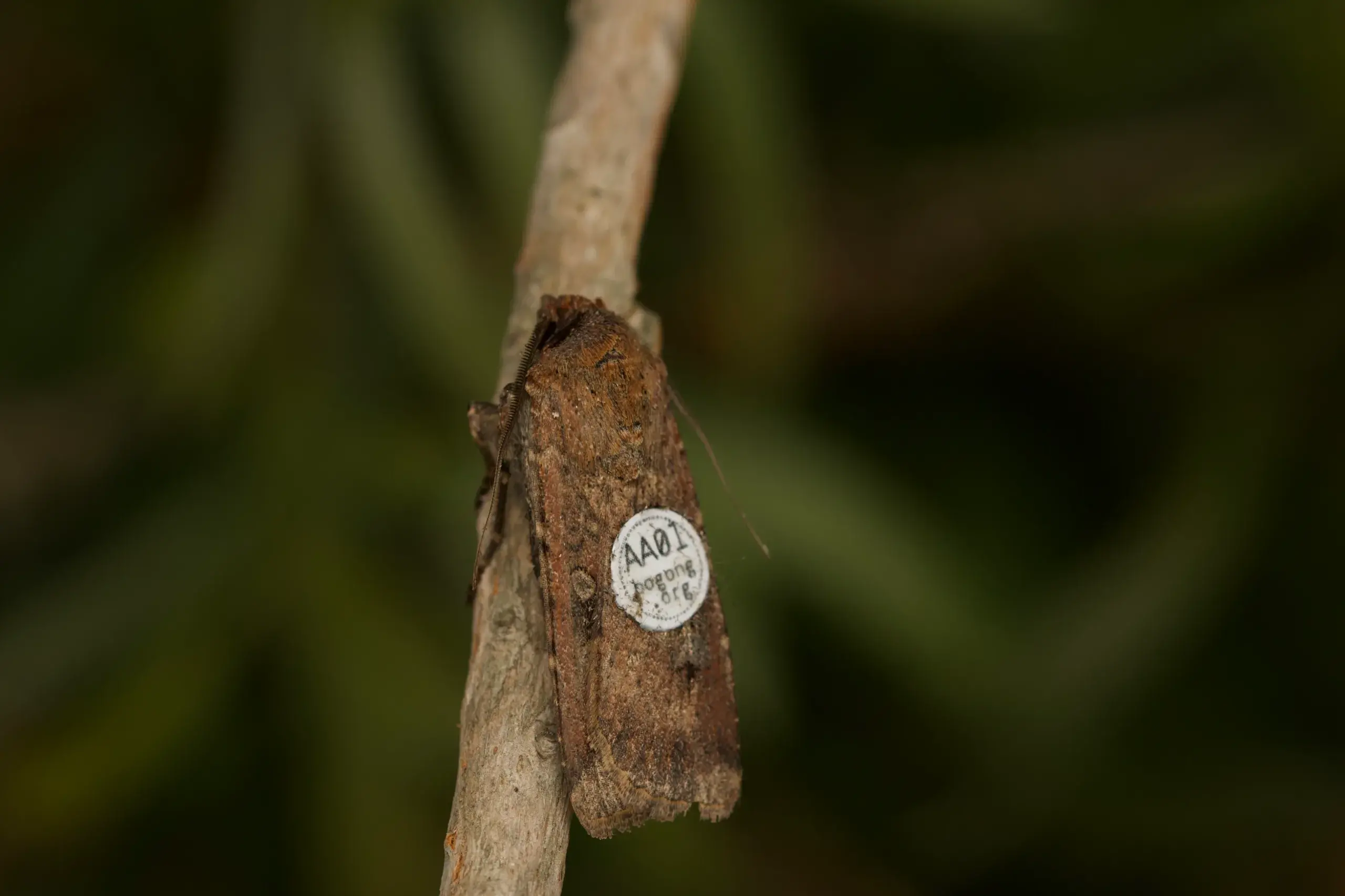
Students and researchers involved in the study are trying to determine the migratory paths of the bogong moth using a mark-recapture program.
This involves capturing up to 10,000 moths from their caves and crevices in the Australian Alps and applying small, circular, paper tags to their wings, each with their own unique identifier so researchers can distinguish between individual moths.
Researcher and PhD Student at Western Sydney University, Connor Marsland, said once these moths have been tagged, they will be released back into their caves to complete their return migration.
“If these tagged moths are spotted on their return migration, then we will be able to determine the direct route that these moths have taken from the Australian Alps,” Mr Marsland said.
“Bogong moths are amazing creatures that undergo a massive migration across Australia each year.
“In Spring, they begin their migration by travelling down to the Australian Alps, where they seek out cool caves and crevices and gather by the millions to escape the heat of summer, in some cases, this journey can be over 1000km in length.
“Once Summer ends, the moths begin their return migration to their breeding sites. The only problem is, we do not know the exact migratory routes that the bogong moths take during their journey, and we do not know the exact locations of their breeding sites.”
Bogong moths are facing serious challenges as their over-summer sites warm up due to climate change and in recent years, they have experienced population crashes.
According to recent studies Bogong moths which are vital to the alpine ecosystem and cultural heritage, have experienced a catastrophic decline of up to 99.5 per cent since 2017, leading to their listing as an endangered species.
Mr Marsland said knowing which paths the moths take during their migration will allow them to ensure that they continue completing their migration each year.
“This is important, because bogong moths bring several tonnes of nutrients to the Australian Alps each year, and many alpine critters rely on their arrival for their survival,” he said.
The Snowy Mountains was chosen for this study as the bogong moths migrate to the Australian Alps by the billions around Spring every year.
By running the project in the Snowy Mountains, it will be much easier to capture, and tag large numbers of moths for this study.
The researchers will be visiting Mt Kosciuszko for this trip, and operating out of Charlotte Pass and are looking for volunteers from around the region to help them with their studies.
Mr Marsland said they are looking for a group of volunteers to host “bug lanterns” on their properties between March-May 2026.
“These “bug lanterns” are specialised light traps, designed to attract moths,” Mr Marsland said.
“We ask that people check these bug lanterns nightly to see whether any tagged moths are passing over their properties.
“No experience is required for this project; we are happy to loan bug lanterns to participants and provide them with training on how to use them and record observations.”
An Expression of Interest can be submitted at www.bogong.org.
Just tell the team where you are located and when you can participate, and they will reach out to you with the next steps.