
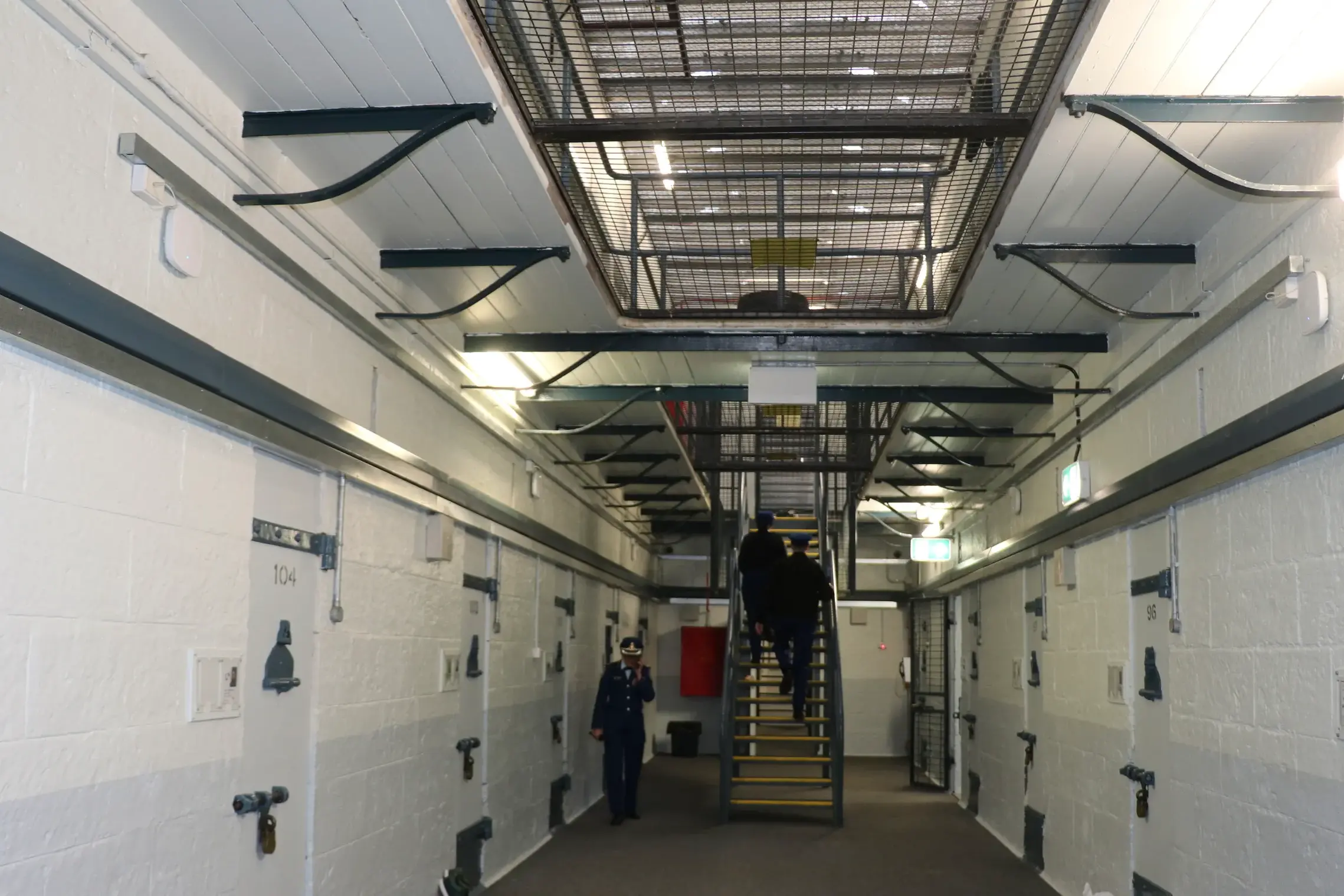
PHOTO
Corrective Services NSW (CSNSW) has welcomed the Inspector of Custodial Services’ report regarding Cooma Correctional Centre (Cooma CC) published last December. The report contains 21 recommendations resulting from the January 2025 inspection.
The first five of the inspector’s recommendations include:
1. CSNSW ensures regular maintenance audits are undertaken at Cooma CC.
2. CSNSW ceases using the cells built in the 1870s as inmate accommodation at Cooma CC.
3. CSNSW increases the average time out of cells for Area 1 at Cooma CC.
4. CSNSW reinforces that inmates being taken off contact visits and telephone calls must not be regarded as a routine penalty.
5. CSNSW conducts an appropriate risk assessment before allocating inmates to cells.
A CSNSW spokeswoman has stated community safety remains CSNSW’s top priority.
“CSNSW conducts regular safety audits and completes maintenance and infrastructure work at the prison,” the spokeswoman said.
The mandate of the office of the Inspector of Custodial Services (ICS) is to provide independent scrutiny of the conditions, treatment and outcomes for people in custody, and to promote excellence in staff professional practice.
The inspection of Cooma CC focused on custodial conditions, including safety and security; the treatment, care and wellbeing of people in custody; the rehabilitation of people in custody, including programs, employment, education and preparation for release; and resources and systems, including the staffing and management of Cooma CC.
The current report noted some improvements within the correctional centre following recommendations made from its last five yearly inspection but also observed some deficiencies within the centre, mostly due to its age.
The jail is a minimum and medium security facility for male inmates and has been listed on the NSW State Heritage Register. “Area 1” within the centre was established in 1873.
The 21 recommendations resulted from the inspection of the two accommodation areas that house two specific inmate populations (Area 1 - the heritage section with some building additions in the 1950s, which can accommodate approximately 175 inmates and Area 2 - less restrictive and set on 300 acres of land known as ‘The Farm’. Area 2 consists of a U-shaped pre-fabricated accommodation area and a separate building with a common area and kitchen, and adjoining staff area which can house 50 inmates).
In the inspector’s report conducted five years ago, the living conditions in Area 1 were highlighted and described as substandard, and that the cells built in 1873 were not fit for purpose.
It was noted that these cells lacked natural light, had broken windows and ligature points.
The 2020 report recommended that regular maintenance audits be undertaken.
Similarly, the 2025 report reveals these issues were again observed during last January’s inspection, as well as evidence of vermin.
The current report states the 2020 recommendation “is still relevant given the dilapidated living conditions and maintenance issues we observed during our recent inspection”.
“Our previous report suggested that the number of inmates who share a cell in the 1873 wing should be reviewed as those cells are not designed to accommodate two people,” the report stated.
“In our recent inspection we noted that just over half (21) of these cells accommodated two men. The remaining 19 cells housed one person.
“The cells in the 1873 wing were small (6.72 square metres (sqm)). Our inspection standards stipulate that 8.75 sqm is a satisfactory size for an individual cell and 12.75 sqm for a two person cell.
“Inmates should not be sharing cells that do not meet the size requirements for two people, let alone one.
“While all cells had a toilet and hand basin, they did not have showers. At the time of inspection in January 2025, all inmates in Area 1 used a communal shower block with 12 shower heads. We understand that CSNSW have since installed shower stalls.
“While these stalls offer more privacy and may reduce the risk of assaults, they do not address the issues around accessing showers when inmates are locked in their cells, which occurred frequently.
“CSNSW acknowledge that ‘inmates should not go 24 hours without access to showers’.”
The report also stated the 1873 infrastructure presents issues for the security and safety of inmates and staff at Cooma CC.
“Officer posts in Area 1 did not have adequate lines of sight, including to the yard,” the report continued.
“Cell doors provided staff with limited visibility into cells with a small viewing hole the only means to communicate.
Some of these viewing holes were painted shut and could not be opened. To assess any security risks or incidents, doors needed to be fully opened.
“We were also concerned about the risk of fire, especially given the wooden floors in the 1873 wing. Correctional centre infrastructure should be compliant with recognised fire and safety standards.”
However, the report acknowledged that the centre is undertaking monthly inspections of all fire detection and suppression systems, as per CSNSW policy.
Corrective Services NSW stated last week it will issue a formal response to the Inspector of Custodial Services’ recommendations in due course.