
PHOTO
The upgraded headquarters of the Snowy Monaro district Rural Fire Service (RFS) at Polo Flat is a far cry from the “rabbit warren” the unit previously operated from, just a few doors down from the recently opened centre.
The “charm and character” of the old building has been replaced with an efficient, modern office and workspace including an outdoors barbecue area - offering a relaxed outdoor setting for volunteer training, community events, hosting out of area strike teams, crews stood up ahead of bad fire days and incident management teams who will be on site around the clock during major incidents.
The larger land size means there is room for additional sheds providing greater logistics capabilities and undercover parking for vehicles, such as for the new Czechoslovakian bulk water military grade truck - the biggest fire tanker at the headquarters and one of only four in the state - plus the new on-site aviation hangar.
Coulson Aviation, a global aerial firefighting leader based in Canada, runs Coulson Aviation Australia which supports emergency services across multiple Australian states, and operates seasonally alongside the RFS providing the pilot and crew person for the aircraft owned by the RFS.
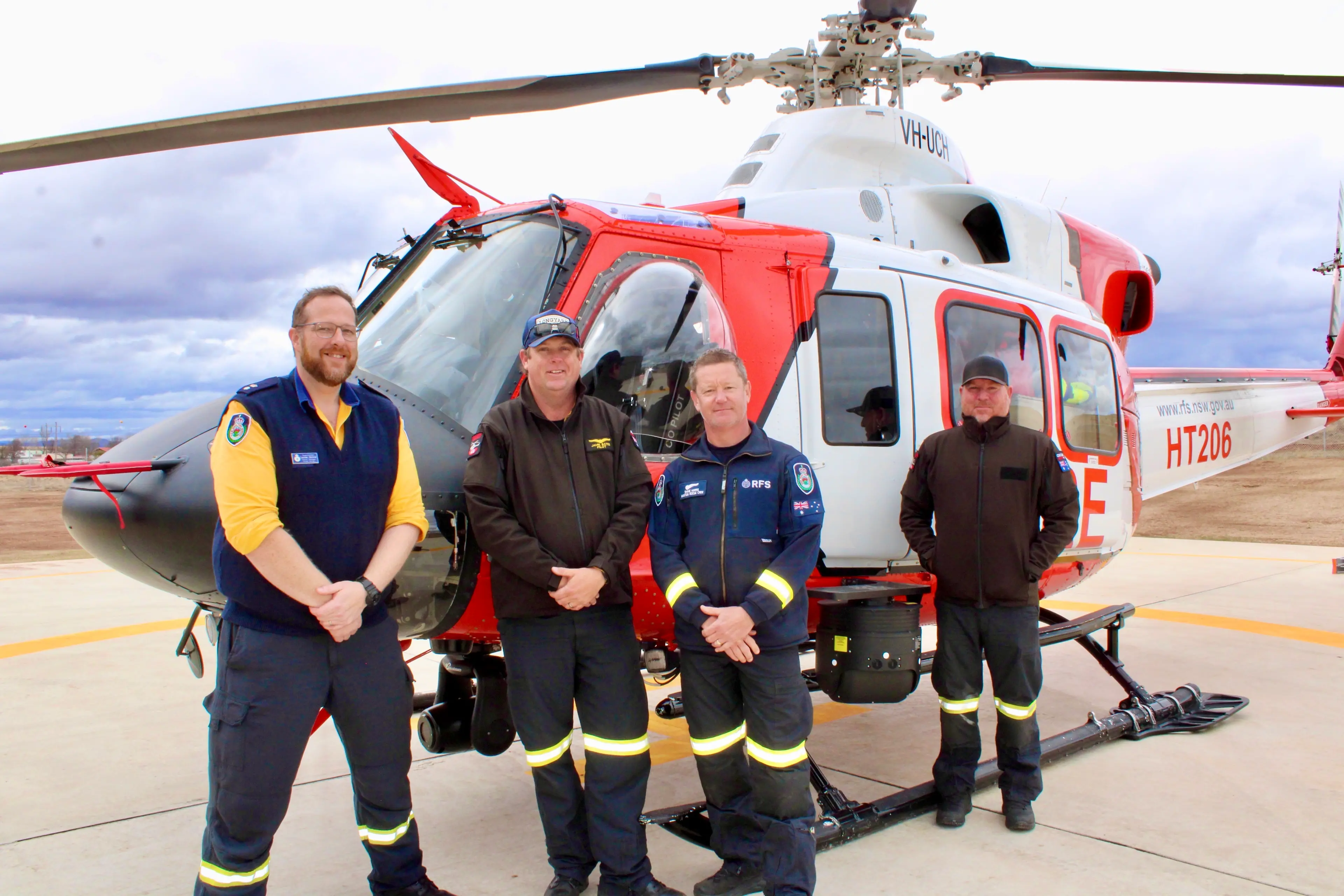
The Polo Flat hangar is where you will find RFS senior aviation officer, Shane Harris, a full-time RFS employee in aviation rescue.
Mr Harris’s background is in paramedics.
He previously worked in ambulance aviation for many years as a team leader in critical care helicopter paramedics.
As senior aviation officer he manages the base at Polo Flat and is a down-the-wire rescue crewman as well as camera operator - mapping fires and operating the infrared FLIR camera system to perform search and rescue or map large areas of fire for intel for the emergency management team or incident management team.
Mr Harris and his team provide search and rescue capability for floods as well as fires.
“In large floods we would be very likely to be involved in pulling people off a roof and out of precarious places,” he said.
“We are supported by a number of highly trained volunteers as well to assist with the role.”
Snowy Monaro RFS district manager, superintendent Lachlan Gilchrist, said most districts have their own remote area crews, who work on a roster system ready for rapid response callouts.
“Volunteer support is vitally important for the RFS; the last audit of volunteers was about 65,000 statewide.”
The aviation rescue helicopter, or ‘workhorse’, is used for multiple tasks.
“We can move what are called long line items - lifting and carrying things like equipment to fire grounds or certain areas - called sling loading,” Mr Harris said.
“The other thing it can do is firebombing.”
Pilots are exceptionally skilled at dropping close to 1000 litres of water over a fire ground.
“We can do that via a bucket and a big belly tank, depending on what’s fitted at the time,” Mr Harris said.
“There is also a very expensive, high-quality camera which can take high-definition images from about 2500 feet. We have different types of infrared and these images are projected on to a screen using interactive software.
“The infrared component picks up heat signatures as well; it plays a really important role in looking for missing persons, particularly in the Snowy Mountains.
“On the other side of the helicopter is the winch.
“It’s important to say we don’t provide medical care, as opposed to my previous role where I was involved in the clinical care. Our tasking is only as rescue,” Shane said.
As aviation rescue officers Mr Harris, and the team, train hard.
“We train as though we are in a work-type situation, and we are very respectful of each other,” Mr Harris said.
“The team is always well-informed in their decision making. These guys wouldn’t put me anywhere they wouldn’t go.
“We have ‘a one out, all out policy’,” he said, “if one of us is uncomfortable or feel as though it might be a dangerous or risky thing to do, we will always agree upon the mission profile.
“I feel more unsafe riding my motorbike to work, than I do getting in a helicopter,” he said.
Mr Harris is preparing for his first bushfire season in the RFS role.
“I have been around caring for people and emergency response for quite a while.
“At this stage of my career, outside of being involved from a health perspective in senior management and leadership roles in paramedics and paramedic critical care, it’s a wonderful privilege to be learning new things in emergency management. I bring certain things to the role, but I have got lots to learn as well.
“Who knows what’s going to happen over the fire season and summer. The general assumption is it will be reasonably busy.
“If a situation comes where we are required to provide help, we are well-trained and ready,” Mr Harris said.