
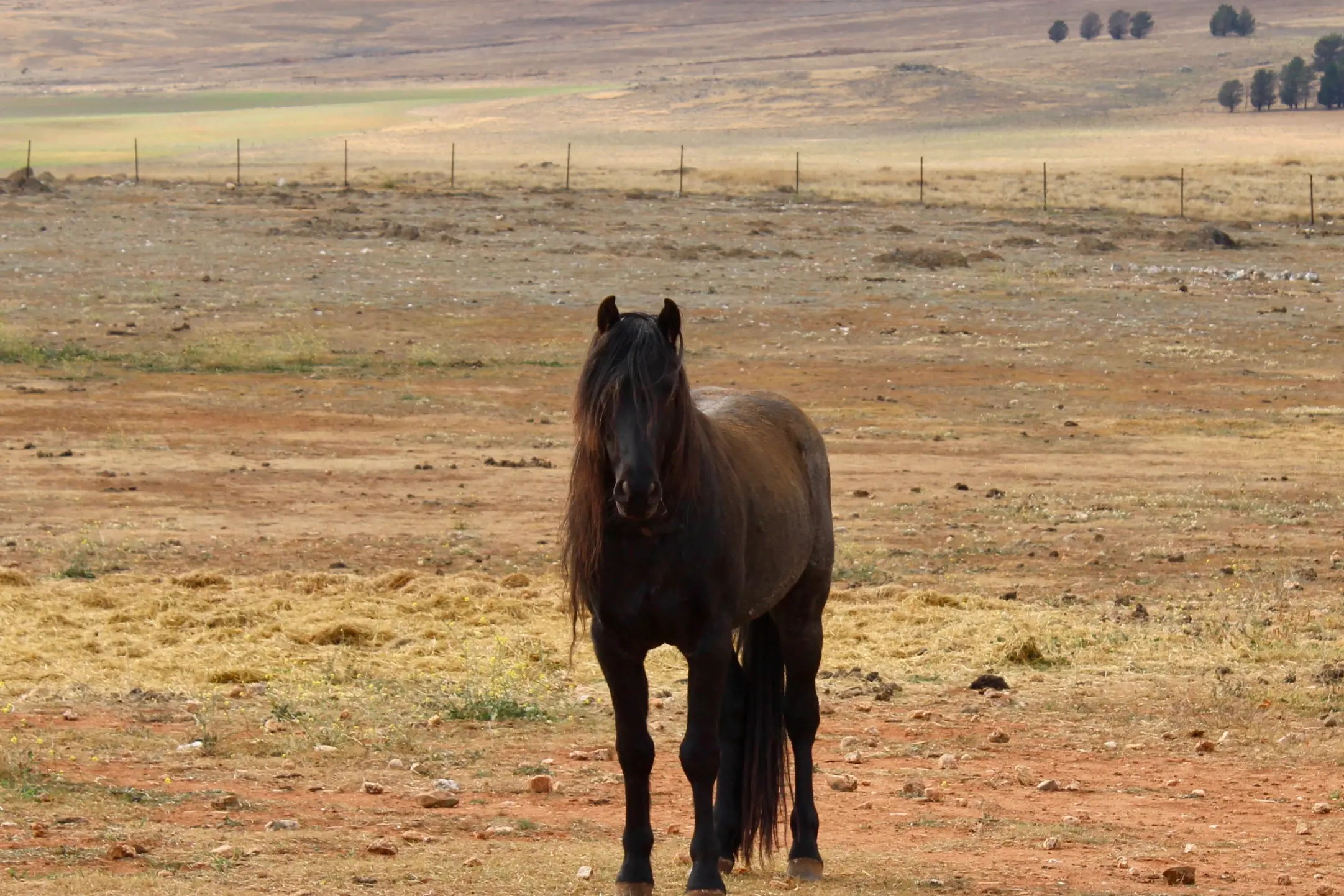
PHOTO
Mountain Brumby Sanctuary Cooma is urgently calling for more volunteer helpers as the next round of aerial shooting of brumbies in parts of Kosciuszko National Park (KNP) is scheduled to begin in June.
The sanctuary, on Middle Flat Road outside of Cooma, is an approved re-homer run by a small, dedicated and hardworking team.
It provides a haven for wild horses, committed to the rehabilitation and protection of Australia’s equine legacy.
National Parks and Wildlife Service (NPWS) recently issued a notice alert advising between 7am, 9 June and 7pm, 30 June sections of KNP will be closed due to aerial shooting operations under the Kosciuszko National Park Wild Horse Heritage Management Plan.
This plan, first published in November 2021 and amended in October 2023, identifies the heritage value of sustainable wild horse populations within identified parts of KNP and sets out actions to protect those heritage values and maintain other environmental values of the park.
The Kosciuszko Wild Horse Heritage Act 2018, which gave special legal protection to wild horses in KNP, was repealed late last year.
An NPWS spokesperson said wild horses will continue to be managed in accordance with the Kosciuszko National Park Wild Horse Heritage Management Plan until the KNP Plan of Management is updated in November 2027. This includes reducing the number of horses in the park to 3000 in wild horse retention areas by mid-2027.
Last Friday the 2025 wild horse population survey was released, which will be used to guide management in wild horse retention areas.
The new data from this government report states the population of horses in KNP is between 6500 to 16,500. The NSW government had previously said the cull in 2024 resulted in a decrease in numbers of wild horses estimating the population at between 2131 and 5639.
A report also revealed the government is considering a fertility control trial, using vaccines.
The report said there are limitations to its use as this method is not cost-effective, and difficult to administer.
“Prevention management areas of KNP are areas where wild horses were not known to occur when the Kosciuszko National Park Wild Horse Heritage Management Plan was finalised in November 2021. Under this plan, these areas are to remain horse-free,” the spokesperson said.
“A range of control measures are used in line with the KNP Wild Horse Heritage Management Plan, including trapping and re-homing as well as aerial and ground shooting.”
9198 wild horses have been removed from KNP between 24 November 2021 and 31 December 2025.
“No control programs have occurred in wild horse retention areas since the 2024 wild horse population survey.
“Re-homing remains an important part of an integrated approach, with 1165 horses re-homed between the plan’s adoption in November 2021 and 21 January 2026,” the spokesperson said.
According to the NPWS, the organisation has expanded feral animal and weed management programs, significantly increasing aerial shooting and baiting over the past five years, primarily targeting foxes, goats, pigs and deer.
“During 2025, in Kosciuszko National Park and surrounding reserves 603 pigs, 2058 deer, 213 goats and 107 foxes were removed via trapping and ground or aerial shooting,” the NPWS spokesperson said.
“Control operations in the Charlotte Pass, Perisher and Thredbo areas will target all feral animals, in particular pigs and deer.”
The imminent closure of sections of KNP for aerial shooting has prompted Brumby advocates and groups to intensify efforts in calling for the NSW government to stop this tool of brumby control management.
While this is happening Mountain Brumby Sanctuary, Cooma, comprising of Maret, Gabi, Andrew and Jo, and committee members Paul, Helen, Amanda, Rachieal and Stephanie are saving as many brumbies as possible.
Maret’s family has been involved with Brumbies over six generations of living in the high country.
The 350-acre sanctuary, owned by Maret, currently is home for more than 50 saved Brumbies.
The sanctuary offers various programs including rescue and rehabilitation, adoption and re-homing, volunteer opportunities and sponsorship.
‘We have saved quite a lot of the Brumbies this year,” Gabi said.
“The numbers the department just released are false. There are less than 1000 Brumbies left.
“The legislation states keeping 3000 running free, but we believe the numbers from the government are really wrong,” Gabi said.
“A lot of Brumbies have been given to the three approved re-homers.
“There is no biological way the number of Brumbies can increase that much.”
She said NPWS is having trouble trapping Brumbies as requested by the three re-homers, including Mountain Brumby Sanctuary Cooma.
“If there are so many left, it should be easy,” Gabi said.
“There are some retention zones where they are not supposed to shoot before next year.
“I just believe it is so wrong to aerial shoot.
“Australia is the only country in the world which shoots horses from helicopters - no animal should be shot from the air, you can’t kill them properly this way.
“It’s just so cruel,” Gabi said.
“Penny Sharpe [NSW Minister for Environment] says shooters used between five and 17 bullets for each horse to get them down.
“So how much pain do they suffer? We can do better.
“If the numbers need to be controlled, what are the real numbers?”
Gabi said four years ago NPWS counted 12,000.
“We brought in 72 people to count brumbies in three days, split into groups to count different sections each day, and these people counted 752.”
After spending time at the sanctuary, some of the Brumbies are re-homed (following checks on the property and its set-up, level of handling and experience), while some of the “wild” ones or older ones stay on the property running free.
“Some of them come in calm and are used to people,” Gabi said.
“Others which have a bad experience or aren’t used to people, then are trapped, can be scared of us when they arrive. I would like it if Parks gave us more time to handle the horses we have, before getting more,” Gabi said, “as they need time to adjust.”
There is one stallion at Mountain Brumby Sanctuary, named ‘Blue Sun’, who carries “blue roan” genes.
‘Blue Sun’ was trapped with two of his mares (he is the son from ‘Bolt’ a well-known stallion now at Umbango South Sanctuary), and will continue the special Kosciuszko blue bloodlines.
“’Blue Sun’ is a stunning Brumby, everything is perfect with him,” Gabi said.
“The two mares could have a foal a year; it’s a bloodline we need to continue.”
Gabi said retaining these bloodlines is of great value.
“They are really good horses, and if they are gone, you can’t get them back.”
From DNA tests frequently carried out, Maret said there are bloodlines in the brumbies that no longer exist.
“I can’t understand how this is just ignored,” she said.
The sanctuary will continue to advocate for the preservation of brumby genetics and the establishment of permanent wild horse sanctuaries, Maret said.
“It is driven by a passion to protect these magnificent creatures and promote humane treatment.”
Mountain Brumby Sanctuary’s rehabilitation program ensures every horse finds a permanent home where they can live in peace and safety.
Visit the sanctuary’s website for further information.