
PHOTO
72142.0
Cultural burns will soon take place at Cooma’s North Ridge Reserve in a multi-agency initiative to reduce fire hazard and improve the health of plant and animal habitats.
Snowy Monaro Regional Council will partner with the NSW Rural Fire Service (RFS) and Fire and Rescue NSW (FRNSW) to deliver part of a five year project - ‘Boosting Biodiversity and North Ridge Reserve’. The project involves two cultural burns at North Ridge Reserve with an Indigenous burning team to conduct the burns.
Cultural burns are being supported by NSW fire authorities as a way to safely reinstate ‘right way’ burning in bushland areas to reduce fire hazard, improve the health of plant and animal habitats and reinforce Aboriginal-led land management practices that have been used for tens of thousands of years.
While often thought of as low-intensity, ‘cool’ fires of the sort that are important to maintain grassy woodlands, cultural burning also includes accommodation of a range of fire intensities and seasons to suit particular plant and animal communities, particularly where they have been degraded by inappropriate land management practices.
Carried out by Traditional Owners, cultural burns are also important to help not only Aboriginal communities continue their relationship with Country, but also to help all Australians improve their relationship with Australia’s naturally fire-prone bushland areas.
The program will involve winter ‘patch’ burns at two small sites within the reserve, one being near the end of Makina Place and the other in the bushland behind Nimby Place.
Pat Swain, local building designer and member of the North Ridge Reserve Advisory Committee, is looking forward to the cultural burns, scheduled for late July.
“It’s been a very long time since cultural burns have been conducted in our region, and bringing them back is important to help us better relate to our bush, and learn how to live with fire in a low threat way,” Mr Swain said.
“Hopefully the late July burns will create an opportunity for community members to visit the sites and talk with representatives of local fire authorities and the team conducting the burn.”
Signs have been in place at the two sites for some months notifying visitors to the reserve the burns will take place during the winter months, subject to suitable weather conditions.
The two sites have been chosen because they contain swathes of sprayed African Lovegrass, that will provide some combustibility despite the recent dry years.
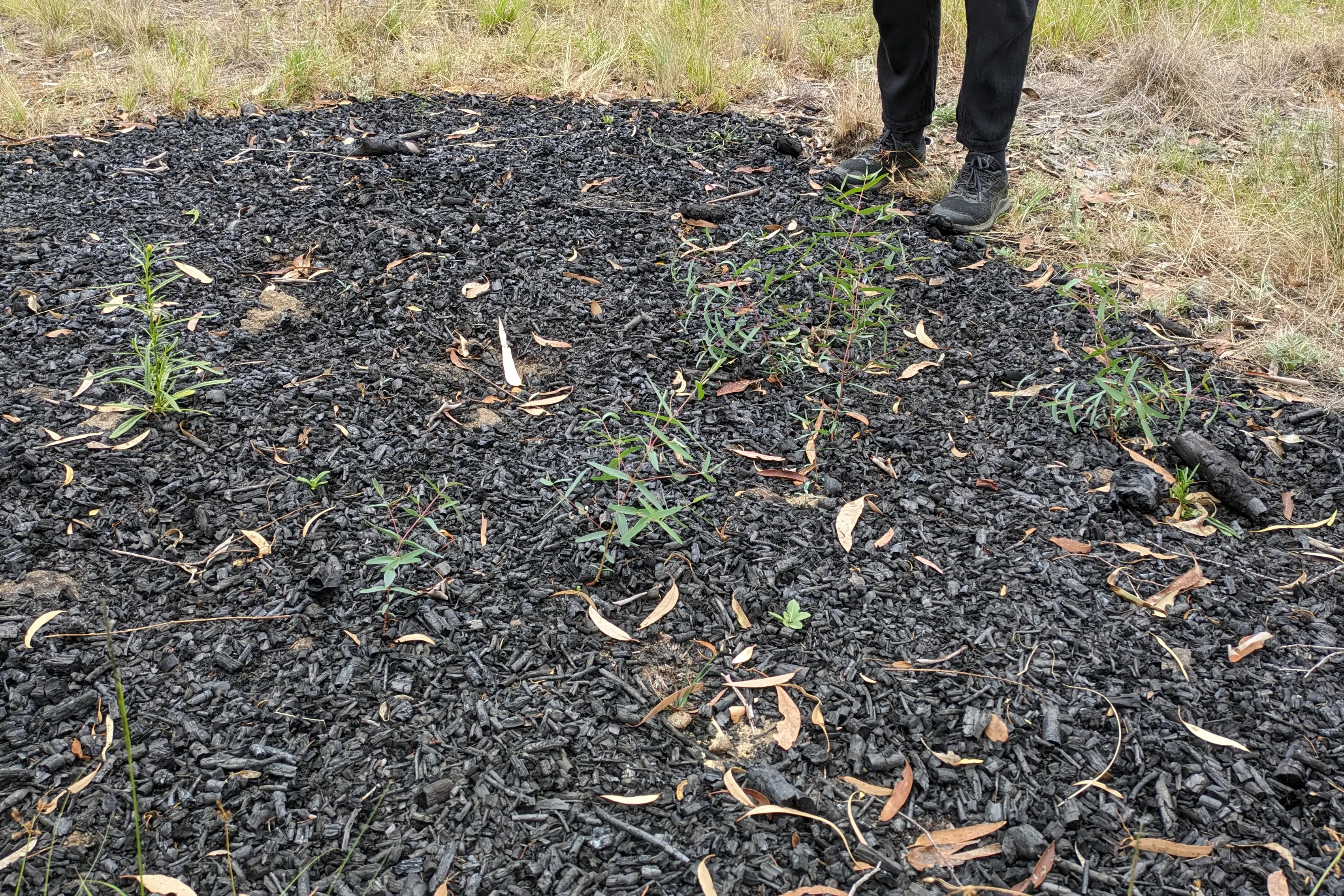
A few carefully designed piles of dried woody weed have also been constructed at each site to provide still safe but hotter burns in particular spots to improve regeneration of desirable natives including native eucalypts which appear to be not recruiting well in the reserve at present.
These pile burns are being incorporated on an experimental basis, with monitoring carried out prior to and over time after the burns.
Consideration is being given to potential burns in future years to involve somewhat larger areas, a possibility that will depend on suitable rainfall.
Lower intensity cultural burns may help to reduce overabundance of native pines over time. It is thought that, partly due to pine thickening, Eucalypts are less dominant now in the reserve and are not recruiting well.
Eucalypts are important in their own right but they are also important food for the nationally endangered Gang Gang cockatoo, and their hollows potentially provide breeding habitat.
Gang Gangs are frequently observed in North Ridge Reserve in the summer months and the project advocates are hopefull they benefit from the overall program.
Another important factor for the burn program’s focus on eucalypts is that Ribbon Gum (Eucalyptus viminalis) - one of the main species of Eucalyptus in the Reserve - has suffered severe dieback in agricultural areas south west of Cooma.
This species, however, appears to remain viable in the reserve, assisting with the species’ potential survival in the face of threats from climate change.