
PHOTO
As the Snowy Monaro prepares to commemorate ANZAC Day later this month, RSL Australia says it is often asked about the correct protocols for wearing Australian honours and awards, commonly referred to as medals, particularly by family members who would like to wear their relatives’ medals in tribute.
Wearing a family member’s medals to a commemorative event is a respectful and meaningful gesture and the RSL says there are several key things to remember when wearing awards that are not yours:
- Wear family medals on the right side to indicate you are not the original recipient.
- You cannot wear relatives’ neck medals, unit citations, or association badges. These are personal to the individual who earned them.
- It’s respectful to wear one medal rack at one time. This ensures that the focus remains on the individual’s service, rather than a display of multiple family honours.
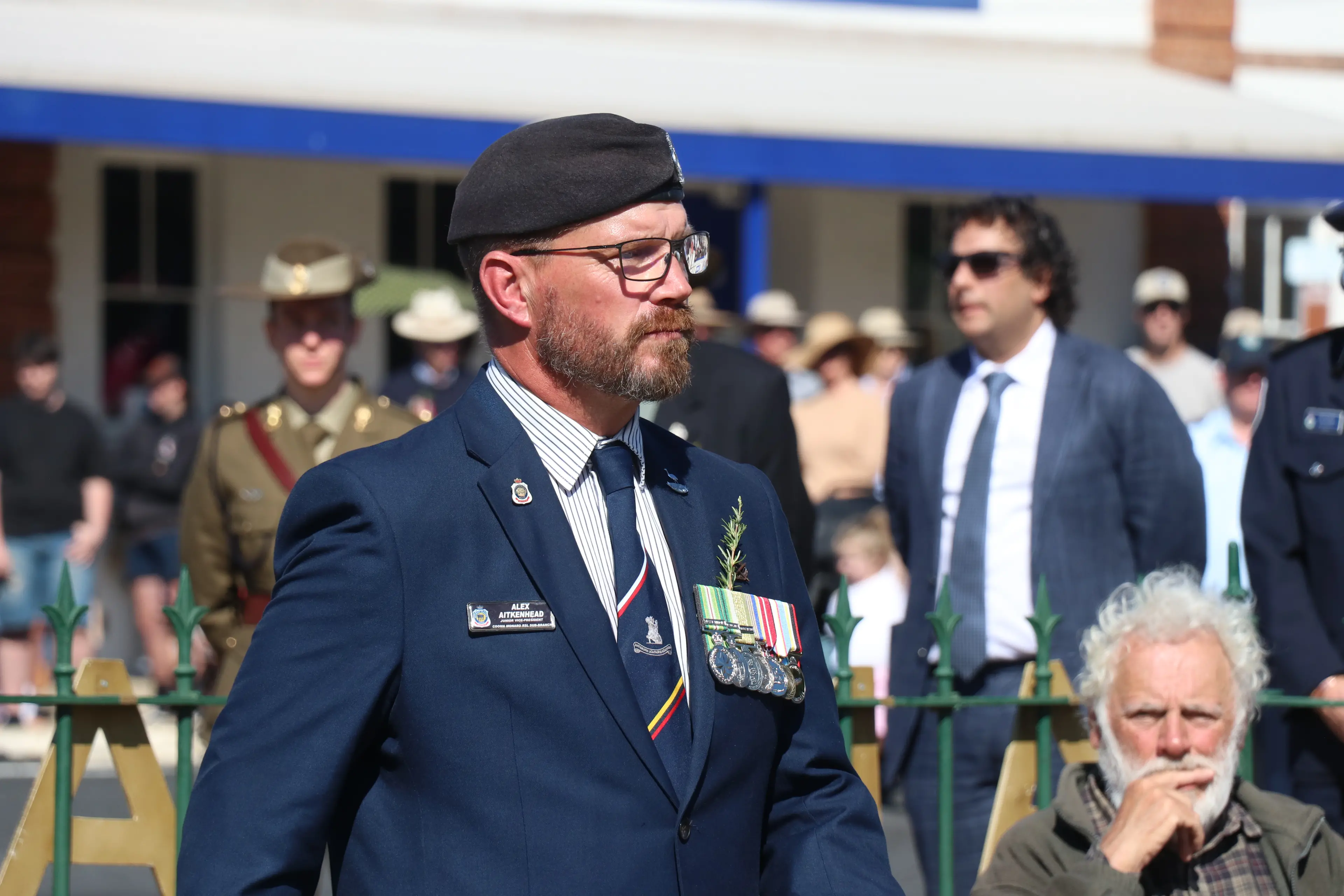
Medals not awarded directly to the wearer are worn on the right side of the chest or jacket. This indicates that the wearer is not the original recipient. The right side is a place of honour for the service of a loved one.
If a veteran is still alive, family members can still wear their medals, with the veteran’s permission, and as long as they are worn on the right side of the chest.
“Perhaps you are marching on ANZAC Day for a family member who cannot. You may wear their medals on the right and march in their honour,” RSL Australia said.
With the veteran’s permission, relatives can wear replica medals while the veteran wears the original medals, as long as they are worn on the right side of the chest.
“The practice of wearing replica medals is a meaningful way for family members to show their respect and pride in a living veteran’s service,” RSL Australia said.
“Replicas are often worn by children or grandchildren, and it allows the veteran to see their legacy being honoured by the next generation. Many veterans and their families commission a replica set for this very purpose.”
Relatives cannot wear a deceased ancestor’s medal designed to be worn around the neck. Medals worn around the neck like some of the Order of Australia medals (AC or AO) can’t be worn by family members. These honours are personally bestowed upon an individual for their specific, distinguished service to the nation.
It is also not permitted for relatives to wear an association badge.
“Badges issued by organisations such as the RSL or other service associations signify current membership of that specific organisation and should only be worn by the member,” RSL Australia said.
Relatives cannot wear unit citations, as the right to wear a unit citation is personal to the individual who was a member of the unit at the time of the honoured action. That right is not passed down to relatives.
It is also respectful to only wear one set of an ancestor’s medals at one time. This ensures that the focus remains on the individual’s service, rather than a display of multiple family honours.
“For example, if you are attending an ANZAC Day service, you may choose to wear your grandfather’s medals, but you should not wear your grandfather’s medals and your great uncle’s medals simultaneously,” RSL Australia said.
“You may want to alternate medal racks for different occasions.”
Relatives can wear their ancestor’s medals earned in a military force outside of Australia, however, it is considered inappropriate to wear medals from a nation that was an enemy of Australia or the Commonwealth during a conflict.
In regard to the legal considerations for wearing medals that were not awarded to the wearer, the Defence Act 1903, Sections 80A and 80B, provides that it is a federal offence to misrepresent yourself as a serving or ex-service member of the Australian Defence Force or to wear a service decoration that was not conferred on you.
By following the right-side rule for family medals, you are adhering to the protocol that respects the original recipient’s service and avoids any legal or social implications of misrepresentation.
“The RSL is committed to commemorating those who have served our nation and educating all Australians about the vital role the Australian Defence Force (ADF) has played, and continues to play, both domestically and internationally in shaping Australia,” RSL Australia said ahead of ANZAC Day.