
PHOTO
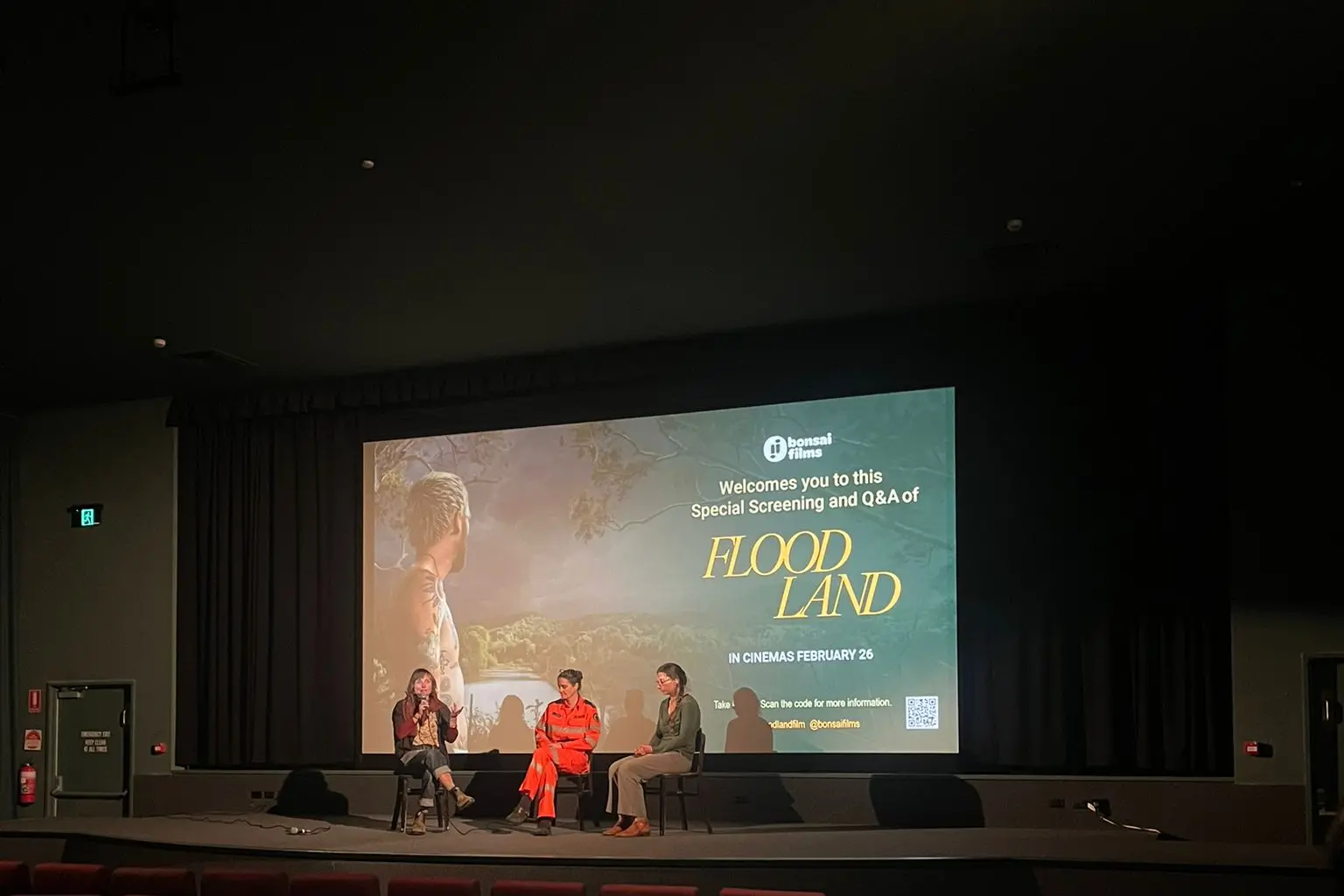
The Jindabyne cinema hosted a significant event on Thursday May 21, as the award-winning documentary ‘Floodland’ was viewed by the community.
The screening, sponsored by Mitre 10 Jindabyne, offered a deep dive into the 2022 Lismore floods and aimed to bridge the gap between the experiences of Northern New South Wales and the future preparedness of the Snowy Monaro region.
Winner of a Sydney Film Festival award, ‘Floodland’ moves beyond the immediate headlines of the 2022 disaster to explore the long-term human and environmental impact on Lismore, often referred to as Australia’s flood capital.
It captures the harrowing moment on 28 February 2022, when the Wilson River rose to a record-breaking 14.4 metres, impacting over 2800 homes, schools, and businesses.
The film is acknowledged for its focus on First Nations healing practices and community-led solutions, highlighting the wisdom of traditional custodians in navigating environmental shifts.
By focusing on the strength found in recovery rather than just the devastation, ‘Floodland’ provides a framework for other regional Australian towns to consider their own adaptation strategies in an era of increasing climate volatility.
Following the screening, a panel discussion was held bringing the lessons of Lismore home to the Snowy Monaro.
The panel featured a diverse group of local experts and leaders, including Ngarigo Elder, Jakelin Troy, State Emergency Service (SES) Snowy River Unit Commander, Malika Bailey, and Upper Snowy Landcare Coordinator, Magdalene Lemcke. There were also two Red Cross volunteers, Jennifer and Susan, who were present at the screening to provide psychological first aid for any attendees that felt triggered by the content of the film.
The discussion centred on a pivotal question for the region, what does community-led climate preparedness look like in the Snowy Monaro?
Floodland producer, Anna Jane Linke, said it was great to spark a conversation, with the 40 Jindy locals who attended, about preparedness moving beyond sandbags and evacuation routes.
“While important, we know communities that survive and thrive through disasters are those connected through informal networks like Landcare, community gardens, and mountain bike meet-ups etc,” Ms Linke said.
“It was great to have Malika and Maggie on the panel to share their insights with the attendees. We just wished for a greater turnout from the rest of the Monaro community to join the conversation.”
The panel discussed the ways in which disaster preparedness is closely tied to community connectedness, the effective sharing of information and the building of trusted networks.
“I spoke about how Landcare in this region operates as both a knowledge sharing network and community engagement organisation, working to connect community through shared activity and be a trusted source of relevant information regarding landscape management,” Ms Lemcke said.
“I think it was important to represent Landcare on this panel to show the multi-faceted nature of disaster resilience, it’s not confined to first responders.
“The ability for an area to truly bounce back in the face of disaster relies deeply on community cohesion, and it is evident that community organisations have a big role to play in connecting people and building trust in community.”
While the environmental challenges of the high country differ from the river plains of Lismore, the core themes of resilience, infrastructure adaptation, and the importance of local knowledge remain universal.
Ms Lemcke said the kinds of disasters facing the Monaro are twofold, with short and sharp events like flash floods and grass fires on one hand, and slow, insidious landscape scale disasters, like drought, ecological collapse and declining landscape resilience in the face of climate change.
“As an established agricultural area in a harsh environment, it is extremely important for our area to be on the forefront of responding to large scale environmental disaster, as many people draw their livelihood from it, and their overall wellbeing is tied to having healthy landscapes,” she said.
“It is important to readily connect and share knowledge on how to manage this landscape for resilience, so as to ensure our community is prepared for, and can mitigate the damage from these disasters.”
The data emerging from Lismore four years post-disaster served as a sobering backdrop for the evening’s discussion.
Ms Lemcke said the film was a great achievement in not only telling the story of the people of Lismore, but in highlighting the decision-making processes different people went through afterwards.
“The film did a fantastic job of showing a diverse range of people hit by the Lismore floods, and doing justice to each of their different stories, and what they were confronted with,” Ms Lemcke said.
“It unified both first responders, First Nations, and community networks as the important ways in which we manage disaster.
“It was confronting to see the archival news footage stitched together over the years to highlight just how bad these recent floods have been, and begin to understand why these floods, have really pushed people to a new breaking point.”
Organisers said the event was an opportunity for residents to engage with local emergency services and community organisations.
By examining the recovery of Lismore, Jindabyne residents can better understand the vital role of community-led initiatives in the face of natural disasters.
“What really stood out in the panel discussion was the agreed importance of remaining connected with your community, and this can just be having a conversation with your neighbours, getting involved in an organisation to get better connected, and staying up to date with local knowledge,” Ms Lemcke said.
“Resilience within a landscape is evident in its ability to manage shocks, as it is within us. The saying from First Nations people, ‘healthy country means healthy people’ rings very true.”
If people want to watch the film there is an online viewing from 1 to 7 June, tickets can be purchased via the website www.floodland.com.au/watch