
PHOTO
A project to restore grave sites and headstones to maintain the rich pioneering history in Cooma’s oldest cemetery is underway.
Christ Church Maneroo, part of the Parish of Cooma and the Diocese of Canberra and Goulburn, was built in 1845 and is the oldest Christian worship building on the Monaro - a cemetery on two sides of the church is the resting place of many of the early district pioneers. Over time, the gravesites and head stones have become run down and broken.
Through a volunteer driven organisation known as Outback Grave Markers, a number of people from the region have formed a group to restore and conserve the headstones and local history with the assistance of a Men’s Shed in the ACT.
Behind the project are former Monaro residents, Bob and Margie Quodling, who have taken a special interest in researching the Canberra and region heritage.
Bob has known one of the founders, Trevor Tough, of Outback Grave Markers for more than 30 years.
The self-funded organisation is dedicated to preserving the history of the Australian outback and has made and placed more than 4500 plaques, mainly in Western Australia, in the past 10 years.
“A few years ago they made a couple of plaques for Margaret (nee Rolfe) to place on family graves at Kenilworth on Springfield Road between Nimmitabel and Dalgety,” Bob said.
“We then had another made for an unmarked grave on Queanbeyan Golf Course.
“In 2025, Trevor suggested Outback Grave Markers loan me a CNC engraving machine to make plaques in Canberra.
“In June last year I obtained approval from the Snowy Monaro Regional Council to place Outback Grave Marker plaques on graves in Christ Church cemetery.”
Bob approached the Hawker Men’s Shed in Canberra soon after and they agreed to setting up the CNC engraving machine and plaque making capability with them.
“We made our first plaque at the Hawker Men’s Shed in September 2025 - for the only unmarked grave in the Old Weetangera Cemetery,” he said.
“Over the past six months we have made several plaques for graves in the local region, mainly Christ Church cemetery.”
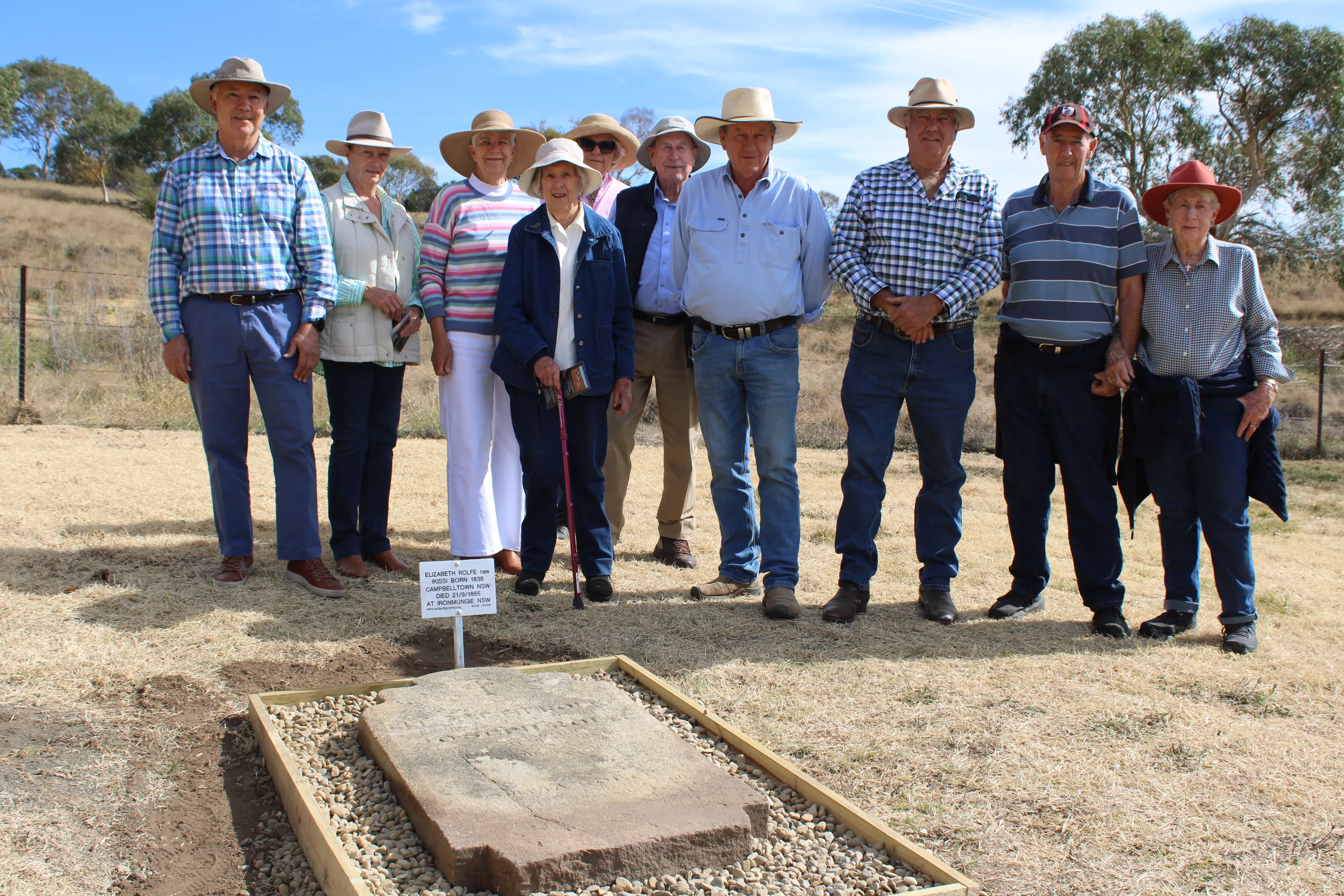
On Sunday 26 April the first five plaques were placed in the cemetery, and on Monday 27 April a few people from Cooma and the Hawker Mens Shed visited the cemetery to discuss what has been achieved, and future plans for the graves requiring restoration.
Bob has spent many hours researching and analysing the cemetery and has found more than 50 unmarked or badly deteriorated graves in the Christ Church Cemetery which the group plans to mark over the next year.
An important part of this restoration work is raising funds to continue the work.
The Hawker Men’s Shed, a not-for-profit organisation, is seeking community funding for this work.
Donations from individuals or organisations, with each plaque costing $80, is welcome.
“We are also looking for local people to help with the research and contributions for the website stories,” Bob said.
Outback Grave Markers works closely with landholders, councils, national park agencies, historical societies and local communities.
Cemeteries are important and fascinating sources of local history that tell many interesting stories from times past.
The oldest known grave in Christ Church Cemetery is for a 21-year-old Irish girl (buried in 1822) and was one of the first grave sites to be restored.
The broken head stones are difficult to turn over, weighing about 400 kilograms, but with the help of machinery they will be turned the right way up and placed flat on the top of the burial site (to avoid further breakage), with a metal plaque next to it containing the headstone’s words before they become completely illegible and lost forever.
Descendants of Monaro family members buried in Christ Church cemetery who are interested in the project and/or would like to restore their family member’s grave, purchase a metal plaque or make a donation, can contact Rob or Margie on rmq1@iinet.net.au
For further information on Outback Grave Markers, visit www.outbackgraves.org