
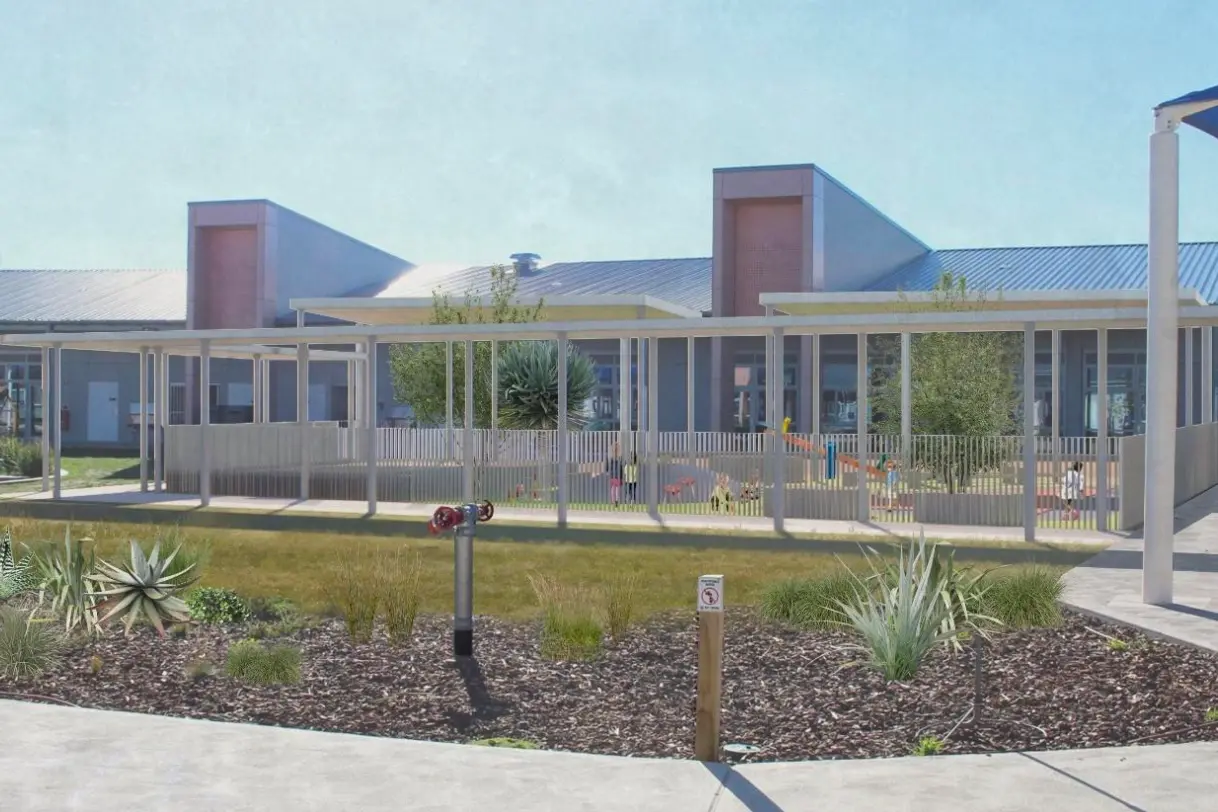
PHOTO
67761.0
By JINDABYNE P&C
When the NSW Department of Education’s Deputy Secretary for School Infrastructure, Lisa Harrington, arrived at Jindabyne’s education campus in early March, it didn’t exactly feel like a breakthrough moment for the Teachers or the Jindabyne P&C representatives.
“At the time, it felt like a bit of a tick-and-flick,” says Shanta Woodhall, now President of the Jindabyne P&C, reflecting on that first meeting before she stepped into the role. “A face-to-face to appease a community that had been very vocal, very frustrated - and understandably so.”
The Executive Committee, Parents and teachers had been raising concerns for months and months. Would the proposed preschool carve into much-needed classroom space? What about safety during renewed construction? And perhaps most visibly, how much worse could the already strained parking situation become?
But standing here now, just weeks later, the tone has shifted. Because, as I put it now, “Lisa is walking the walk.”
So what changed? And more importantly, what has actually been delivered for families on the ground?
One of the biggest concerns raised by the school community was the potential loss of play space - a non-negotiable for a growing primary school. Could a preschool be delivered without squeezing out the very room children need to run, reset and thrive?
The answer, it turns out, is yes.
Following community feedback, School Infrastructure NSW has confirmed that nearly 8000 square metres of additional play space will be opened up within the school’s biodiversity area. From the beginning of Term 2, students will gain access to this expanded space - a significant boost that allows children to run, play and connect with nature in a way that simply wasn’t possible before.
“For us, that was critical,” Shanta explains. “We weren’t just pushing back for the sake of it - we were advocating for balance. If something new comes in, it can’t come at the expense of what students already need and were lacking.”
And that raises another question that many in the community had been asking: were these concerns actually being heard, or were they just being acknowledged?
Because for parents navigating the daily school run, one issue consistently bubbled to the surface – parking, or the lack there of it!
Anyone who has attempted a Jindabyne school drop-off knows the challenge. Tight windows, limited space, and a growing population all converge in a daily test of patience. Add a preschool into that mix, and the concerns were immediate: would congestion tip into chaos?
Again, this was put directly to Harrington and her team during consultation.
“They came back with a prompt response! And importantly, they didn’t dismiss the issue - they investigated it.”
That investigation has now resulted in a proposed solution: an additional 11 parking spaces on the western side of Education Road, aimed at easing peak-time congestion for both families and staff.
It’s not a complete fix - and the Department acknowledges further planning and approvals are required - but it is, as many parents would see it, a tangible step in the right direction.
And beyond the tangible outcomes, Shanta says she has heard there is something less visible - but just as important - a beginning of a culture shift. “What the Education Department is seeing is a change in culture,” she says. “Our Department of Education are no longer hearing an immediate ‘no’. You ask a question, you raise a concern, and Lisa is going away and investigating how it can work. That hasn’t always been the experience with School Infrastructure, and it’s been really encouraging for our community to see that change in approach to support our Teachers and the Executives.”
So, does this mean the broader concerns about the preschool have disappeared? Not entirely.
The original proposal sparked strong reactions across the community, from fears about construction impacts to questions about long-term capacity as Jindabyne continues to grow. Those concerns were real, and they were loud.
But what this latest update demonstrates is something equally important: the value of sustained community advocacy.
“We’ve always said - we’re not anti-preschool,” Shanta emphasised, “we support public early education. What we wanted was a solution that works for the whole campus.”
And perhaps that’s the question at the heart of this story: what happens when a community pushes back - not to stop progress, but to shape it?
In Jindabyne’s case, the answer appears to be evolving in real time.
There was a moment, not that long ago, when many parents felt decisions were being made to them, not with them. That early March meeting carried all the hallmarks of a process ticking along regardless of local voices.
But now?
Now there is expanded play space. There is movement on parking. There are ongoing conversations.
“It’s not perfect,” she says, “but it’s progress - and it shows that when you keep showing up, keep asking questions, and keep advocating for your kids, you can influence the outcome.”
And maybe that’s the story worth telling - not just about a preschool build, but about a community refusing to be a footnote in its own future.