
PHOTO
Screenshot
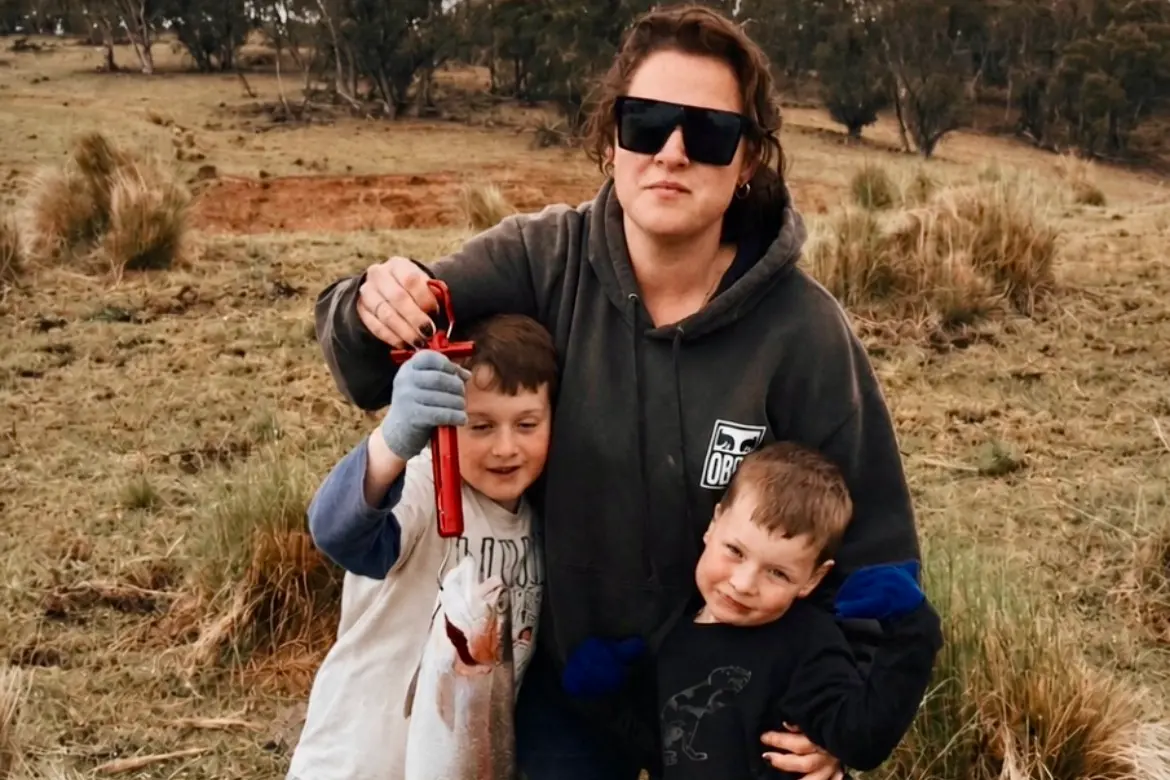
Since Nimmitabel resident, Shandelle Miller, was diagnosed with a rare stage four low grade serous ovarian cancer she, and her family, have had their whole world turned upside down.
For Shandelle it has been a difficult and life-changing reality to accept, and a major adjustment for her two young sons, Archer and Dyon, who are currently in the care of their father and nan and pop.
Archer is non-verbal and has a genetic-gene deletion disorder, which has meant he has spent a lot of time in hospital.
Shandelle has been in Sydney and at Chris O’Brien Lifehouse Hospital since 19 May.
She underwent an extensive 11-hour de-bulking surgery, during which surgeons removed multiple large tumours, some measuring up to 80mm. While the operation was considered successful overall, not all the cancer could be removed as several smaller tumours remain.
The surgery involved extensive procedures throughout her abdomen and pelvis, including a full hysterectomy, bowel re-sections and reconstruction, lymph node removal, and abdominal wall repair. Recovery is expected to take between two and five years, with a long road still ahead.
“It just doesn’t feel real that I have cancer and that I have been here in hospital for seven weeks. There’s been so much going on, it’s been a lot to process,” Shandelle said last week.
“My surgeon pretty much saved my life; without her I probably would have been sent home on palliative care.”
Shandelle, who is 38, was not aware of the cancer until Dyon lightly pressed on her stomach when they were playing together.
“It winded me and just knocked me about, it was just a light press, like giving me a hug. I then felt around and felt a golf-ball shaped something in my abdomen, to the right of my belly button.”
Within the two months of visiting the doctor, undergoing tests and preparing for surgery, she could no longer feel it.
“It had travelled up my entire abdominal wall into my intestine - pretty much everywhere - and on to the diaphragm. I have had a couple of nodes removed. For all the cancer to be taken out they would have had to remove my entire intestine,” she said.
“With the cancer being so rare, there is no clinical studies for referencing, there is no set treatment that will ‘cure’ me. I have no set life expectancy timeline. Reccurence is a given with its high occurence rates. It’s just a matter of when.
“I am still stage four...it’s just lucky I got on to a surgeon who was going to help me.”
Emotions have been running high throughout this ordeal, especially not being able to see her children.
“I have my days when the emotions get the better of me. I cried when the nurses were teaching me how to change my stoma bag after the surgery, but you just keep going. I have to keep going so I can get home for my boys.”
As part of her recovery, she also has a catheter and ileostomy bag, which doctors hope can be reversed within six to 12 months through further surgery and rehabilitation.
Shandelle has lived in Nimmitabel for about 14 years. She worked as head baker at the Nimmitabel Bakery for seven years, and her sons attend Nimmitabel Public School.
Their Dad, Chris is looking after Archer and Dyon while Shandelle is in hospital.
They stay at Shandelle’s parents’ (Rachieal and Colin) farm on weekends.
“Nan and Pop’s farm at Ando is a good break and distraction for them as they have cows and sheep and the boys can ride around the farm on their bikes and get to have some fun.”
Shandelle said she is deeply grateful to her surgical teams, family, friends and the wider community for their ongoing support.
There are many challenges faced by families dealing with ovarian cancer, including emotional, physical and financial impacts of treatment.
At this stage, support towards medical expenses, travel and accommodation costs associated with treatment, household expenses and assistance for Shandelle’s children would likely have the greatest impact.
A gofundme page https://www.gofundme.com/f/standing-behind-shandelle-and-her-boys has been organised and local fundraising initiatives are being discussed to assist Shandelle as she continues her journey of recovery.
Donations can also be made to account name: Shandelle Miller, BSB: 012633, account number: 269 546 006
She said the local support is amazing and very much appreciated.
“I have definitely been feeling it, but I’ve been too sick to look at and read all the messages. I am so very tired too. I know some of the locals have been cooking meals for the boys and cooking them cakes and other bits and pieces. It’s helped a lot - just one night of their Dad not having to cook dinner gives them a bit more time to do other activities where they don’t have to think why is Mum not here cooking us dinner.”
Shandelle was looking forward to being discharged on 24 June to be with her family, before having to return to Sydney for another procedure, then chemotherapy treatment in Canberra, followed by hormone therapy.
However, Shandelle’s condition suddenly deteriorated so she could not leave hospital and was transferred to ICU for treatment, where she has been gradually improving.
This was a devastating set-back for Shandelle who was hopeful of spending quality time with her two sons.
“The boys have been strong and brave, I’m really proud of them,” Shandelle said.
“Chris hasn’t been able to work since I went into hospital.
“So, he was looking forward to me returning, and being able to go back to work.
“I don’t have a discharge date as yet. I have to get through this and then onto the ward for a few days and make sure I am 100 per cent before being discharged.”
An ovarian cancer diagnosis can be devastating. In the next five years, approximately, 9000 women will receive an ovarian cancer diagnosis.
The Cancer Council states diagnosing ovarian cancer can be difficult as symptoms are often vague and shared by many other common illnesses.
An individual’s prognosis depends on the type and stage of cancer as well as their age and general health at the time of diagnosis.
Signs of cancer are physical changes (like lumps or bleeding), while symptoms are feelings you experience (like pain or fatigue). These can vary and whilst they may not be cancer it’s always best to check with a doctor if concerned or any changes are noticed.
Individuals may have one or more of the following symptoms - abdominal bloating; difficulty eating or feeling full quickly; frequent or urgent urination; back, abdominal or pelvic pain; constipation or diarrhoea; menstrual irregularities; tiredness; indigestion; pain during intercourse and unexplained weight loss or weight gain.
“I think the main thing is that I am alive, and my surgeon was able to do surgery and take away most of the cancer, I am so grateful.
“Everything else is one day-at-a-time; my focus is to just get through all of this and get home to my boys.”