
PHOTO
As the start of the Bushfire Danger Period on 1 October approaches, the Snowy Monaro Rural Fire Service (RFS)is preparing for the season ahead and urging the community to do the same.
The recently released Australasian Fire and Emergency Service Authorities Council (AFAC) Seasonal Bushfire Spring Outlook shows NSW is entering the season much drier than usual, following below average rainfall and warmer conditions.
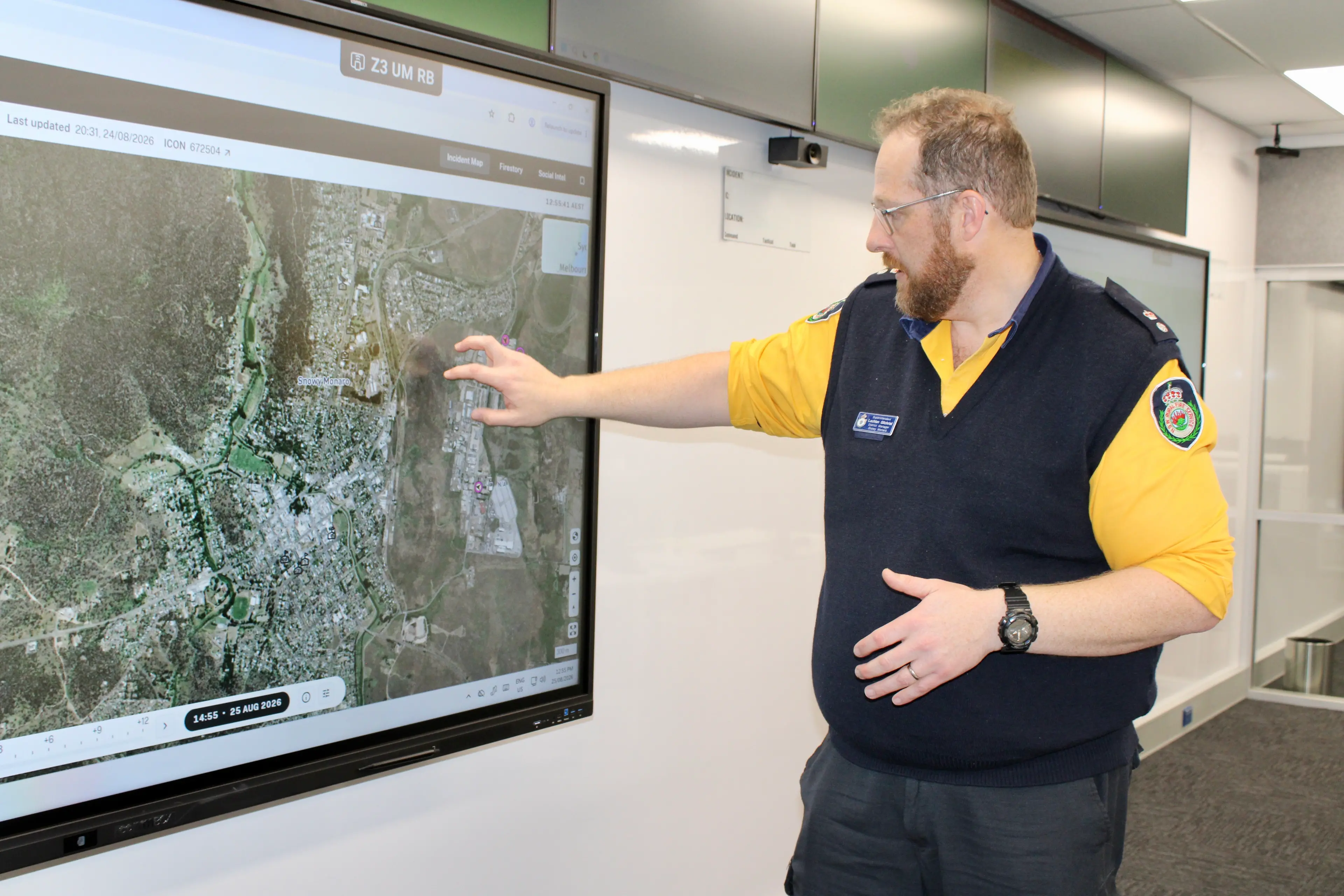
Snowy Monaro district manager superintendent, Lachlan Gilchrist, said officials looked at whether the bushfire danger period should start earlier. However, advice from the Bureau of Meteorology and fire behaviour specialists indicated that fire risk across the region was not high enough to warrant bringing the start date forward.
“Although it is very dry in parts of the district, the seasonal outlook in spring is about average,” he said.
“So right now the conditions for an earlier bushfire danger period are not there. We had a really wet autumn, which I think contributed to that, and we haven’t had a super cold winter.
“The fire season will be challenging, but we will dispatch crews quickly and hit fires hard and fast should any occur.”
The outlook has identified an increased risk across northern and south eastern NSW this spring.
South eastern NSW is already drying rapidly, leading to low soil moisture and conditions that increase the likelihood of fires starting, taking hold and spreading more quickly.
Forecasts are not always accurate though, and with this in mind, local RFS crews have been undertaking substantial hazard reduction, particularly with African Lovegrass.
“The lovegrass is a huge issue in our district. It poses an enormous risk to some of our communities, especially in the corridor between Bredbo and the ACT border, and traditionally that’s where we have had our fire runs,” superintendent Gilchrist said.
“I’m really grateful for a strong 2IC, who has a background in community risk, who’s been taking the fight to the lovegrass and doing a lot of hazard reduction in high risk areas. He has brought a different approach and has had success not only doing hazard reduction but working with private landholders as well as Transport for NSW, Crown Lands or Local Land Service agencies to aggressively go in and pursue it. So far it’s been very effective; the downside is it will, obviously under the right conditions grow back, but it makes it easier to manage after we burn it away.”
Superintendent Gilchrist met with his captains last weekend ahead of the 1 October start to the bushfire danger period.
“My intent is clear - weighted response, rapid response and inform the community - they are the three priorities from me,” he said.
“Behind that, my commitment to the captains and our volunteers is assuring they have the things they need to do it safely, be it additional resourcing or welfare support from the RFS.”
He said the level of preparedness for the community cannot be understated.
“So many communities have been impacted by fire over recent years. It’s the fast running grass fires that can very quickly threaten property and lives,” he said.
“For the community, I would have to say the focus is prepare now; do the yard work that you have been putting off. There is a window at the moment to do this before the official fire season begins.
“It’s a constant vigilant process for the community, but we have a really switched on community, they are no strangers to fire in a landscape.”
He said the Hazards Near Me app is an important information tool for the public and those who already have the app on their phone need to make sure it is updated.
“Preparation is paramount,” superintendent Gilchrist said.
“At the moment we are outside the bushfire danger period, so anyone preparing their property should jump on the RFS website and notify of any burns - there is no permit required yet to burn.
“I want the community to safely remove excess vegetation, if it’s safe to do so, especially on rural properties.
“If you plan to burn, you need to notify neighbours and the fire control centre within 24 hours of the burning, not the day of. If someone rings 000 we will still send a truck as we have a statutory responsibility to do this, but it will help with the measure of our response if we know about any burns through burn notifications we receive.”
When the bushfire danger period begins, a permit to burn will be required, which is an online process through the RFS website.
The community can also apply through their local brigade permit officer.
Superintendent Gilchrist stressed it is possible for residents to conduct their own burn during the bushfire danger period, if safe to do so.