
PHOTO
Book review by Nick Goldie
We’ve probably all met an echidna, walking in the bush, or in our garden. And for most of us, that’s about all we know about these enigmatic creatures.
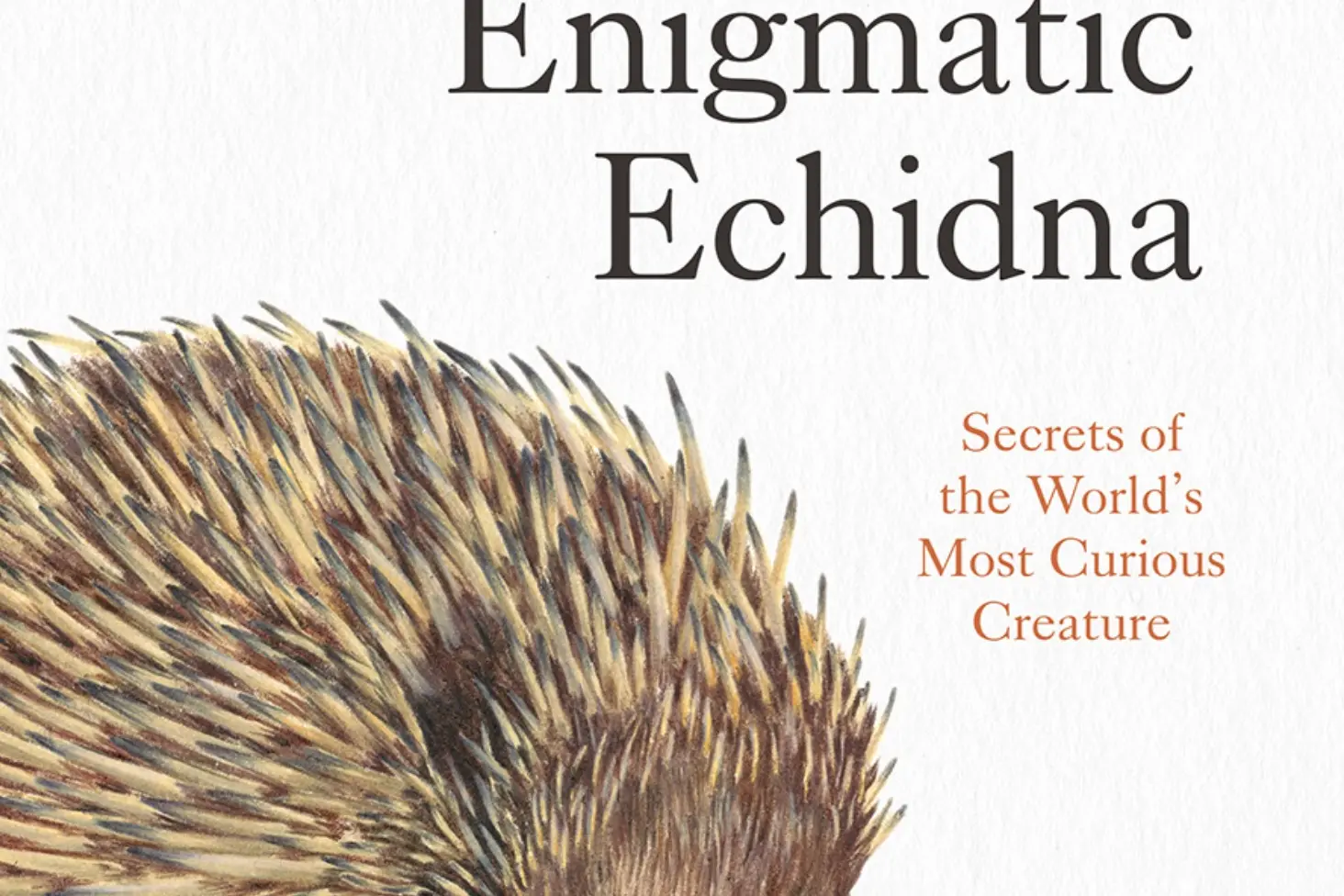
Biologist, Danielle Clode, fills in the gaps in our knowledge in her new book ‘The Enigmatic Echidna’. It is a delight.
At first sight, the book is a little threatening – there’s a lot of it – but it’s fascinating from the opening page, and she has a most engaging writing style.
First, she says, find your echidna, and this isn’t easy. These strange creatures live highly independent lives, paying little attention to the doings of mankind.
“A miniature earthmover has left a littered trail of tireless excavation, oblivious to gates, paths, walls or carefully tended plants.” But where is the animal?
In theory, says Ms Clode, it should be easy to find an echidna, because they are Australia’s most widespread mammal.
However they are also widely distributed, from the lowlands of New Guinea to the snowy peaks of Tasmania, and unpredictable and unsociable they follow their nose, or snout, wherever it takes them.
This largely solitary life means that there has been little scientific study of these animals. In captivity, they are long-lived and form quite close bonds with their keepers, though they are also skilled escapologists.
They are “difficult to catch, nearly impossible to confine and easy to lose.”
As a result, there’s little reliable data on echidna numbers in the wild. A sad chapter in this otherwise cheerful book notes that the one threat which echidnas have not learned to cope with is the ever-growing rural network of bitumen roads.
Generally indestructible, echidnas have no defence and seldom survive contact with vehicles.
More cheerful is the chapter ‘The Delicate Matter of Echidna Sex’, which points out that echidnas are “intrinsically curious animals” and seem to enjoy solving problems, even where food is not involved.
Echidna sex is quite remarkable from go to whoa. It starts with the uncomfortable fact that these curious animals are covered with sharp spines (I am reminded of a sign, seen in an aircraft hangar: “Bring your aircraft from above, like porcupines making love: carefully”).
The only possible way for these spiny creatures to mate, said an early (1957) zoologist would be standing, nose to nose. In fact, over recent years, echidna mating has been observed and never has involved echidnas standing upright on their hind legs.
Mating occurs, says Ms Clode, when the female is good and ready, “either end to end or facing each other, and usually in tree trunks or hollows.”
Ms Clode has produced a book which is bursting with facts, research results, anecdotes, detailed description, all of which are a joy to read.