
PHOTO
THINK "drumming" and most people conjure up images of a drummer in a rock band, sitting behind an enormous drum kit, often with a quilt stuffed inside the bass drum to dampen its sound.
Or, the kid next door, starting out his career as a drummer, driving the neighbours mad as he learns the difference between a snare, a bass and the cymbals most nights of the week.
But drumming is not all it seems.
Fact is, there are many kinds of drums to suit various genres of music. Drumming is something for people of all ages and musical abilities to get involved with.
And, drumming can even be good for your health.
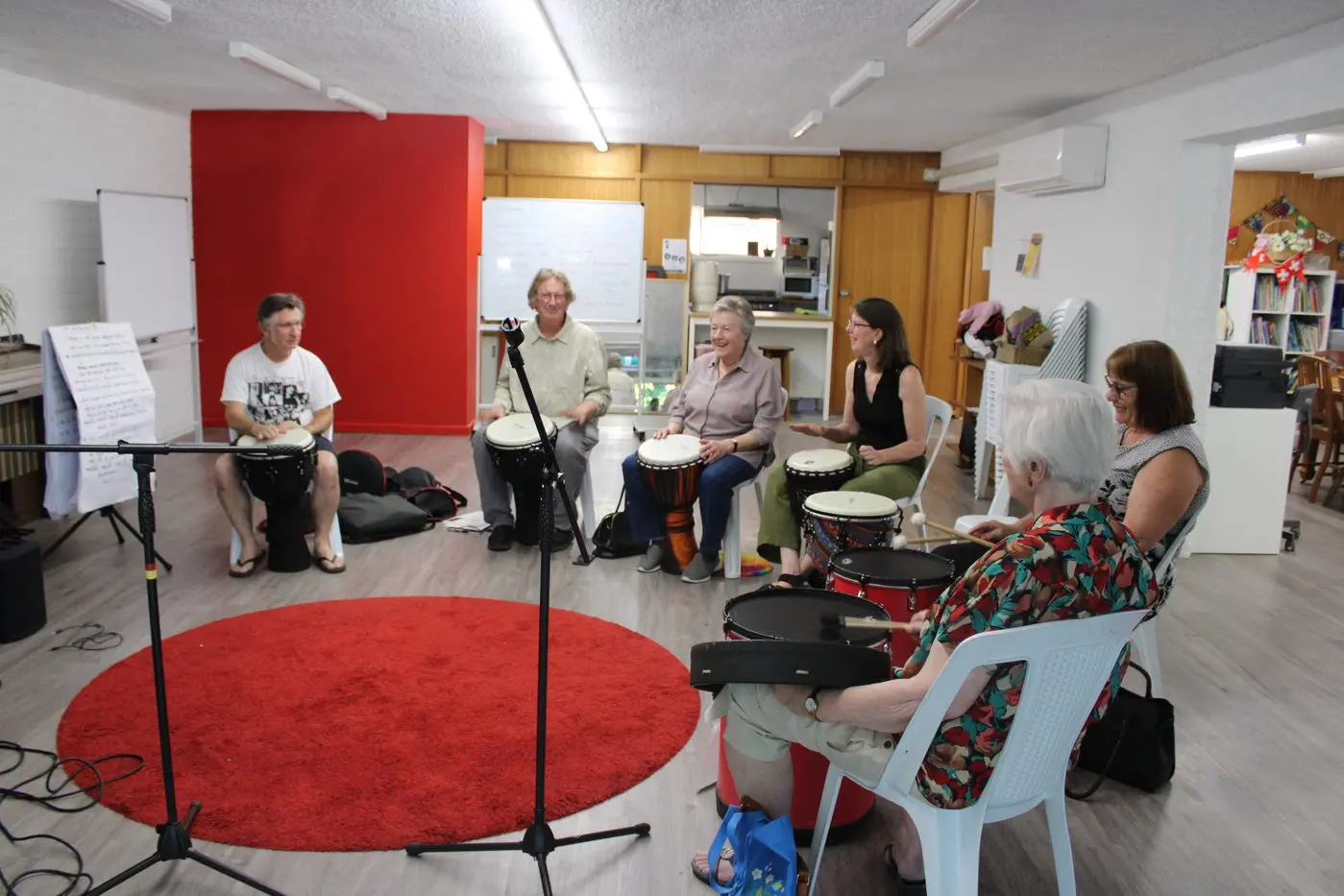
Cooma based musician and former teacher Paul Mackey , who leads a drumming circle at the Cooma Multicultural Centre, runs school programs for Monaro Family Support Service and offers drumming circles at festivals and events, is a firm believer in the benefits of drumming for all.
He uses djembe drums in his work, which originate from Mali in Africa.
"Of course drums are worldwide, even in Australia, for celebrations, gatherings, communication, sending messages," Paul said.
"People sit around in drum circles on beaches, banging beer bottles, whatever they can get their hands on.
"Drumming is just a natural thing for people to do and has huge wellbeing benefits."
Paul, an agricultural science and science teacher and guitarist at the time, undertook a a course in 2011 with an organisation called Holyoake which does social work and community welfare using drums, in Western Australia.
"They were using the drums and interacting with one another and making connections with real life situations," he said.
"Their 10 week course was to do with finding and recognising rhythm in your life, being a good listener, knowing you are part of a community but also an individual, working together in harmony and being a team player, working as a team.
"You can build all those skills through drumming and reflecting.
"Even values come into it, the things you hold."
Paul said he could see that drum circles were being offered for corporations as team building exercises.
"The guy who did that course was going into schools and Aboriginal communities and I thought it would be something I could use with kids at school and in the wider community," he said.
"Now he has Rhythm2Recovery organisation, so they are really utilising it as a stepping stone in developing social cohesions, reflective skill and all that sort of thing."
Paul started the CMC drumming circle almost 10 years ago and it has been growing steadily during that time.
"Music releases good hormones into the body, feelings of wellbeing. It creates connection and acts a means of communication between people. They might come form different countries and not speak each other's language, but give them drums and straight away all the barriers have gone and you are chatting away about something you have an interest in and you make a connection."
He says people don't need particular musical talent to be able to play the drums.
"If you can found to four, or three, or six/eight, you can do it," he said.
"We have our heart beat before we are even born. We have a breath. Music is within us all the time - the rhythm, the sound, the sequence, the patterns.
There is actually a way into playing, particularly the djembe that makes it really easy. You can pick it up quickly and once you get over a certain inhibition, it becomes easier.
"Like all music, if you want to develop greater skills, you need to work at it.
"Drumming is also good at left/right brain coordination, creating stepping stones and giving people the opportunity to be creative themselves."
Paul says the sky is the limit with drumming patterns.
"You can have your time signatures, but it's unlimited. We actually use percussion instruments like triangles, shakers, cymbals, bells, all sorts of things, even supermarket plastic pig toys with squeakers.
"People are using drumming for meditation, for developing affirmations. You can develop a rhythm from a phrase.
"We are also trying to bring in melody instruments like flute and violins and certainly guitar and voice into the group.
"It is kind of like a gate into a paddock which opens lots of possibilities."
Paul was born and raised in Cooma, worked away teaching in schools and then returned, where he taught at St Patricks Parish School until 2016 when he took a part time role with Monaro Family Support.
He visits all the Monaro schools running the Drumbeat eight week program, with the aim of building teamwork and encouraging the students to develop listening skills and learning to look after their wellbeing.
"They enjoy it. I don't feel like you ever have any discipline problems," he said.
Paul has access to around 50 drums and concedes his van is getting full!
"Monaro Family Support purchased 13 new drums last year to add to the 25 we had and we are grateful for their support. They also purchase frame or buffalo drums which we use as well."
Cooma Multicultural Centre reopens January 6 for 2025 and the drumming circle will start in mid January. Paul will also run a drum circle at the Numeralla Folk Festival in January.
"You don't have to be multicultural to come along," he said. "Everyone is welcome, regardless of age or ability."