
PHOTO
Farming and rural life on the Monaro can be tough and challenging.
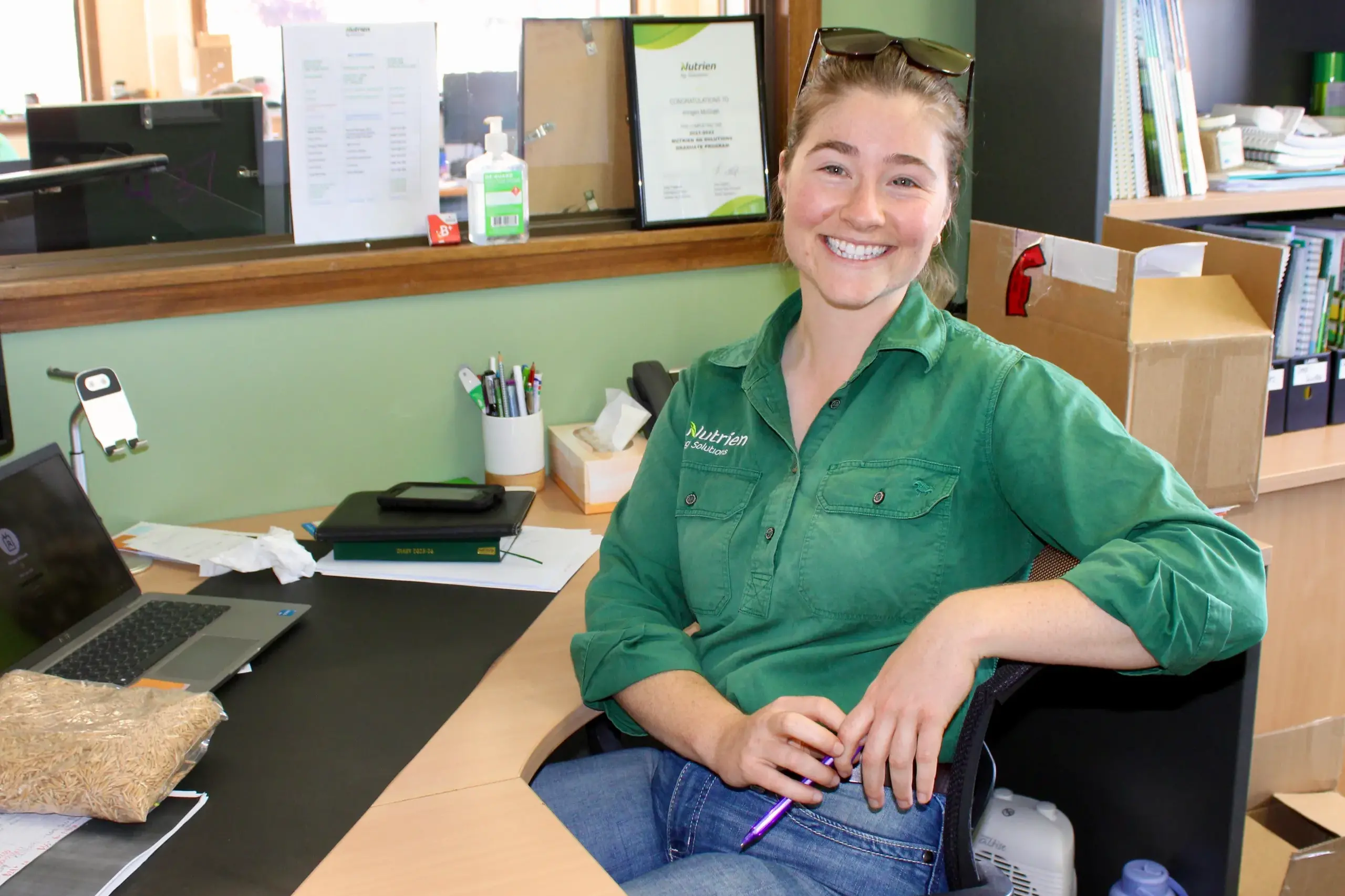
Local agronomist, Imogen McGrath, has been assisting farmers in the area after picking up a position in Nutrien’s graduate program when she finished university.
“My job is to consult with farmers, to take their questions and problems and deliver the science in a practical way so landholders can understand the intention and implement the change,” Imogen said.
“My clients across the Monaro are almost all graziers, which means their measure of productivity or “success” is usually the health of sheep and cattle. I work with my clients to fill the winter feed gap, meet livestock growth targets and maximise production of meat and wool.
“But our climate and our weed pressures locally are uniquely challenging, so I also help clients manage their natural assets – of which soil is one of the most important. Farmers understand better than most that soil health directly determines the health of their herd or flock. Chemical and physical soil health have been accepted topics for decades, but science is quickly playing catch-up when it comes to understanding and categorising our soil biological communities.”
It is this biological space that fascinates Imogen who can see a real opportunity for repairing landscapes and improving the resilience of farming systems as a result.
Hailing from Yass, Imogen has quickly learned over the short time she has lived and worked on the Monaro that not a lot changes, given the current seasonal conditions and forecast, for many clients whether it rains or not at this time of year.
“For farmers who don’t have reliable or quality perennial pasture paddocks, they don’t have a choice but to sow - if they don’t put something in the ground before the frosts set in, then their chance of feed through winter is a guaranteed zero per cent. That’s an easy choice to make.”
Imogen said rainfall on Sunday, 1 February, delivered anywhere from 4-70mm, which has built upon totals between 20 and 160mm for the month of January.
“There are plenty of clients happy to tell me that the Monaro has seen far worse - and likely will again. And with more rain falling last weekend (even only a few mm), I’m starting to see some optimism creeping back in around the seams of a once-drought-stricken summer,” Imogen said.
Imogen was raised on the family farm, about five kilometres upriver (towards Yass) from Burrinjuck Dam.
Her father registered his Merino stud, Billa Burra Burra, in the late 1970s and still manages all aspects of the stud today.
Imogen lends a hand from afar with some of the tasks such as the advertising, and enjoys helping show her dad’s stud team at Nimmitabel and Dalgety shows (as well as others).
She finished Year 10 at Mt Carmel Catholic School in Yass, then studied for Years 11 and 12 at Hurlstone Agricultural College in Glenfield, Sydney.
“The contacts I made at Hurlstone encouraged me to move to Gatton and Brisbane for university, where I completed a Bachelor of Agribusiness and a Bachelor of Sustainable Agriculture (Agronomy).
“Most of my university studies looked at horticulture, tropical pastures, cereal breeding and the occasional foray into dairying. I graduated at the end of 2020, so my final year of university was spent back on the farm with my father due to lockdowns and the Queensland border closure.”
From an early age Imogen knew she would follow a career in the outdoors.
“My grandmother, as well as being a farmer’s wife, was a keen gardener and loved her animals,” Imogen said.
“My very first paying job was helping my uncle with his free-range eggs, which I continued part-time even through high school when I was in Sydney.
“I completed work experience during school in the local plant nursery in Yass. I worked two jobs through university semesters, both in a butchers shop in Brisbane and in the office of a mechanic to the south of the city.
“Over summers and during uni breaks, when I wasn’t home on the farm, I worked casually for Landmark branches in Moree and Gatton. These roles with Landmark, now Nutrien, in particular, were critical influences that helped determine the path I would take after uni.”
The Nutrien’s graduate program started with 12 months as a trainee agronomist in Forbes.
“As someone with a livestock background, Forbes was much like Moree for me – large machines, high land values with huge investments in infrastructure and a cropping focus that revolved around a calendar,” Imogen said.
When she moved to Cooma in 2022 Imogen graduated from Nutrien’s agronomy development program in November of that year.
“As an agronomist, my role is primarily to be a conduit,” Imogen said.
“Scientists and researchers globally have been solving agricultural questions for hundreds of years, but sometimes that research can be lost in jargon or parked on the shelf for being too narrow-minded.”
When Imogen is not at work she spends most of her spare time in the garden,” she said.
“I have found landscaping projects to be a great way of passing dreary days in the middle of winter. I also really enjoy the proximity of the mountains in winter, and take the odd ski day when I have the chance.”