PHOTO
By TRISTA HEATH
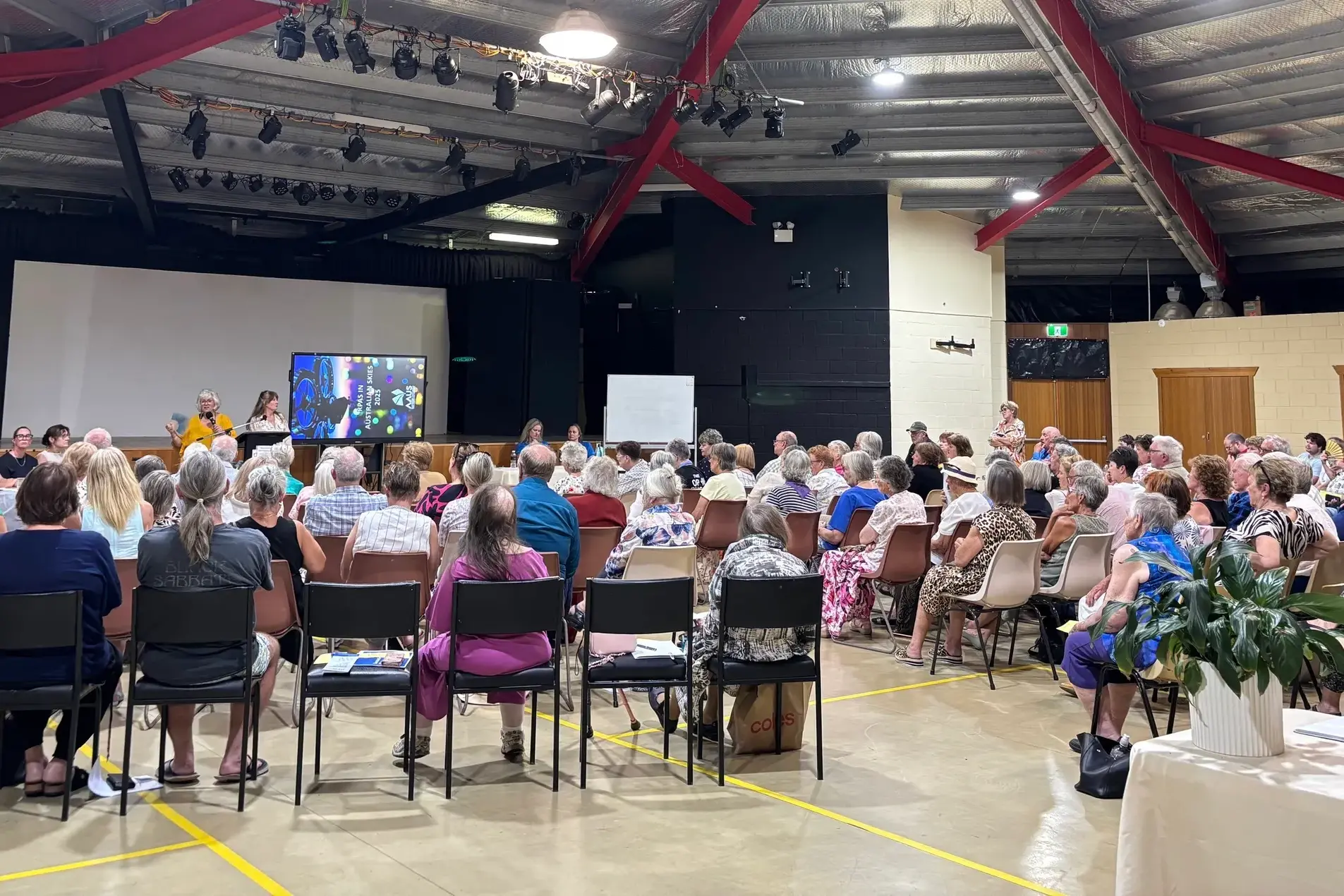
The Snowy River Hostel committee hosted an important meeting at the Berridale Hall on Saturday, 7 February regarding the future of the hostel.
It was an opportunity for the community to have their say and vote for the model they believe will most benefit the region’s older residents.
Voting was open to Snowy Monaro residents, until 5pm on Monday, 9 February at selected sites and on the ballard provided at the meeting on Saturday.
Two guest presenters showcased their business models as potential options for the re-opening of the hostel including Currawarna Assisted Living Ltd (CALL) and Cooma Challenge soon to be Monaro Community First formerly.
Currawarna director, Dr Keith Campbell, addressed the approximately 150 community members who attended the meeting to give a presentation on how their model could be implemented into the hostel in Berridale as an assisted boarding house.
Dr Campbell said most services that are currently available in regional Australia are becoming under financial constraint, and the government is finding it harder to fund those services, leaving the community responsible to save them.
“So, in this extent, we’re going back to where the community started in the ‘70s, in the ‘80s. They built the facilities, and they ran them themselves,” Dr Campbell said.
Dr Campbell explained how the community of Bombala was able to form a committee and spear headed a community campaign and extraordinary fundraising effort to re-establish the facility as a community driven and owned enterprise.
In February of 2024 Currawarna re-opened its doors in the new format of a not-for-profit assisted living facility, with the focus being “Locals caring for Locals”.
CALL is a 29-bed supported housing facility developed with the help, and ongoing support, of the wider Bombala community.
In early 2024, CALL re-opened Currawarna as an assisted living facility with the aim of offering affordable, supported housing to those members of the community wishing to transition from independent at home living.
CALL provides assisted living facilities to clients who for medical needs require accommodation away from home or to aid in the delivery of NDIS packages.
Dr Campbell said he is not willing to risk the integrity of CALL by taking on the hostel under their umbrella but is willing to take it on with the help of the committee and the community, under strict guidelines that first must be established.
“Where does CALL sit? It operates as an assisted boarding house, its outside the residential aged care structure that the government funds in what you’d see in big residential aged care centres from around Australia,” Dr Campbell said.
“Unfortunately, that model is financially broken in regional Australia, it operates well in a city environment but in regional areas if you go below 80 beds the economics don’t work. Therefore, CALL operates under a different structure and remains legally as an assisted boarding house situation.
“So, all services that are available to you in your home are available to you in CALL.”
Ultimately to make this model work for the hostel, CALL would need a major commitment from the local community beginning with at least $1.5 million cash in the bank and CALL will not become tenants of the building, they would require free and unencumbered transfer of the facility from council.
If this model was voted upon Dr Campbell said that realistically once all matters are met the assisted boarding house would not begin to operate for at least two years, until everything is brought up to standard.
Cooma Challenge chief executive officer (soon to be Monaro Community First), Angie Ingram, presented a model to use the hostel facilities as a respite aged care service and an NDIS hub while providing their many supports, services, and programs to people with disability and the elderly to the region.
“Under aged care we have funding, but we also do homecare packages through a brokerage, same as CALL, we do overnight and day respite, we do domestic assistance, personal and social support and NDIS. We do this across the entire LGA,” Ms Ingram said.
“We have registered nurses; we have a skill base to cover and provide many services.
“We are a registered NDIS and registered aged care provider, however this doesn’t mean we would go into residential aged care as its simply not a sustainable and viable option, so what does your community need and how can we make that happen?
“We are proposing for the hostel in Berridale to use the facility for a flexible model of overnight and day respite, supported independent living, which is an NDIS provision, and would also incorporate the boarding house model if that what’s the community would like.
“We would use the space to do broader activities, provide allied health and other identified services, we would like to identify the gaps and hopefully put them into this model.”
Cooma Challenge has a lot of clients already in Berridale, with their major services being aged care provision.
These clients could potentially use some of the services offered in the new model if chosen by the community and adopted by council.
The community had the opportunity to ask each presenter questions to better understand the models before placing their vote.
Once a model is voted upon, the Snowy River Hostel committee will put it forward to council by March 2026.
The committee thank all who attended and voted.