
PHOTO
A groundbreaking three-year study of 370 students across 10 schools has shown that students in structured, long-term music and arts programs outperform their peers academically.
The study was conducted by The Song Room, an Australian not-for-profit organisation that provides free music and arts programs for children in disadvantaged communities, and the findings illustrate what Steiner schools like The Alpine School have always known: that the creative and performing arts help children learn better.
The Song Room study found that students enrolled in structured music and arts programs for at least a year achieved significantly better academic results in English, Science and Technology, and Social Sciences. The findings align with numerous other studies that have found that learning music strengthens crucial cognitive skills like memory, attention, language development and even spatial reasoning skills.
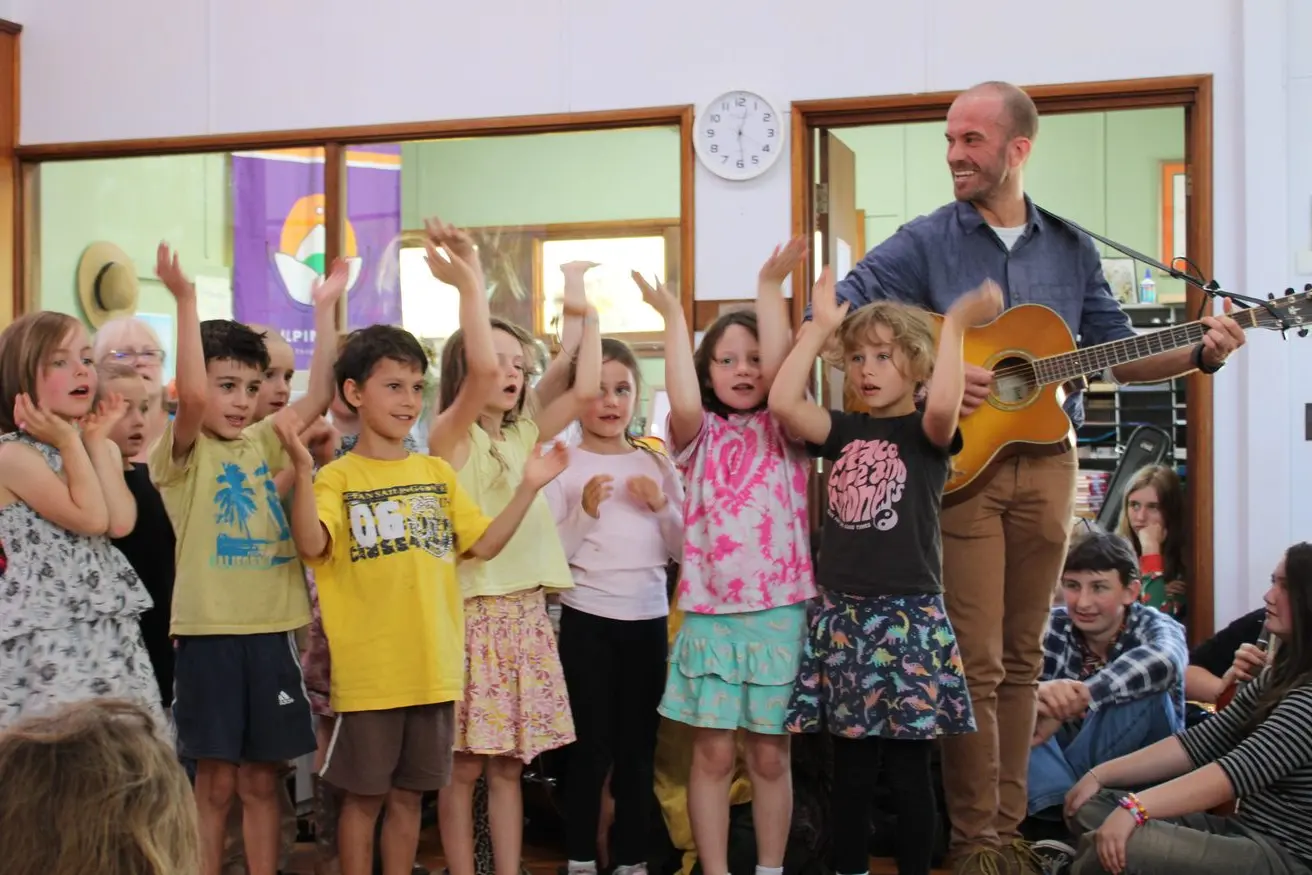
At The Alpine School, this philosophy comes alive daily, with both primary and high school students beginning each morning with group singing. Far from being just a warm-up exercise, these sessions combine the cognitive benefits of music with a daily practice that has been shown to create a sense of security and wellbeing in students.
Perhaps the most striking academic findings from the study, however, were the measurable improvements in literacy, something The Alpine School has long observed as Kindergarten children naturally develop these critical cognitive and language skills through singing simple melodies while they tidy up, garden or cook.
Beyond academics, the research revealed children in arts programs felt less stressed, behaved better, and got along better with teachers. This mirrors observations in Steiner schools, where the daily verses sung throughout primary school create natural transition points that help children regulate themselves, manage emotions and develop positive learning attitudes.
The alignment of the study findings with The Alpine School’s approach is evident in their structured music program. Early primary students begin learning music with simple five-note recorders, progressing through different recorder types that support learning across all areas of music. From Year 3, students can choose to learn violin or cello, developing concentration and fine motor skills that transfer to other subjects. High school students have opportunities to expand their playing experience through rock bands with weekly lunchtime jam sessions and various ensembles preparing for festivals or recording projects.
Perhaps most compelling for parents, schools with structured music and arts programs show significantly higher attendance rates. As one principal in the study noted, "Students are so excited about these classes that they make sure not to miss school."
The research confirms what The Alpine School and other Steiner educators have practiced for decades: including the creative and performing arts throughout the school day isn't just enriching and fun – it's a powerful way to improve cognitive development, learning and wellbeing for all students.