
PHOTO
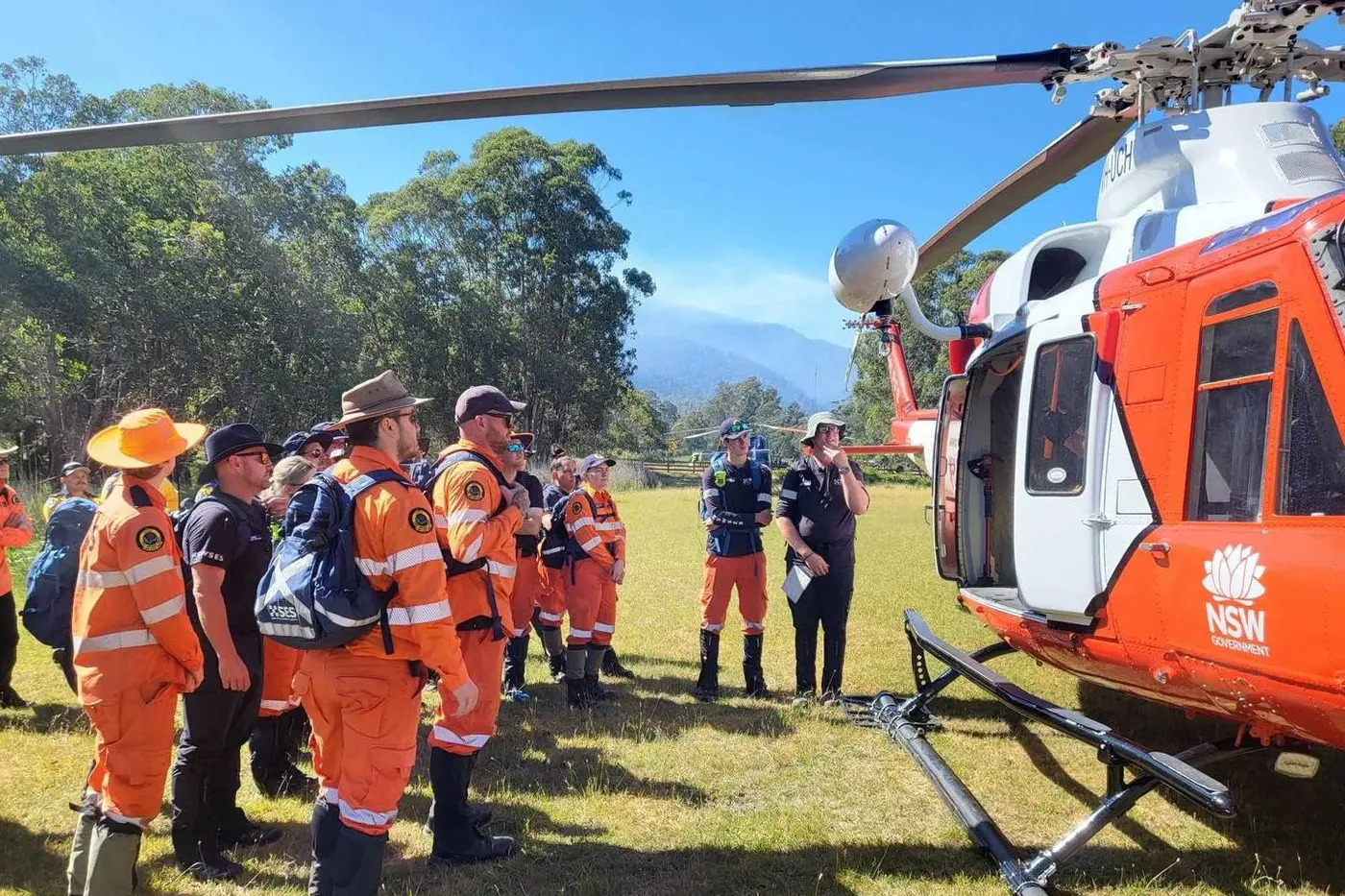
EMERGENCY services personnel are resting and reviewing after the gruelling two week, multi-agency search for missing hiker, Hadi Nazari, in the Kosciuszko National Park came to a happy ending last week.
More than 300 volunteers and paid professionals joined the search for the Melbourne medical student who was reported missing from the lower end of the "toughest hike in the country" - Hannels Spur track near Geehi - on Boxing Day.
Of those, more than 150 were SES volunteers, both local from the Snowy River, Cooma Monaro and Alpine Search and Rescue units and from throughout NSW. Other volunteers came from Vic Bush Search and Rescue, ACT Remove Access, VRA Rescue NSW and Rural Fire Services, with others from NSW Ambulance, NSW Police Rescue and Bomb Disposal Unit, Riverina Police District officers, National Parks and Wildlife Service, PolAir and Westpac Lifesaver.
Under the guidance of NSW Police, the fit and highly qualified searchers spent days and even nights scouring snake infested, steep thick scrub for Mr Nazari in heatwave conditions of up to 33 degrees.
They suffered heat exhaustion, minor injuries and fatigue, were away from jobs and families, but kept turning up to do their bit to help. Snowy River SES volunteers ranged from 18 to 69 years of age.
The NSW Government deployed helicopters through PolAir and the Westpac helicopter was also involved.
The discovery of various belongings including a lighter, a hiking pole and a camera case kept hopes up.
Ironically, Mr Nazari was located by hikers more than nine kilometres from the search area, on the Main Range track near Blue Lake, 6km from Charlotte Pass with wide sweeping views all the way to Mt Kosciuszko.
While the official searchers did not find the lost hiker in the end, NSW SES Snowy cluster Chief Inspector, Malika Bailey, said ultimately it did not matter.
"The main thing is, he was found and we are all just so happy," she said. "I think many of us were crying".
Mrs Bailey, a mother of two who has been in the SES for 14 years, did the first three days in the field, then was SES search commander under the directorship of NSW police based at the command post for all but three days.
She paid tribute to all of the searchers and NSW Police whom she said had "managed the situation brilliantly" and said it was "a team effort, with many lessons learned".
The Hannels Spur track, which was the route of the first ascent of Mt Kosciuszko in 1840, is known as the toughest hike in Australia, due to its 1800 metre elevation gain over just nine kilometres, thick bush and changeable weather.
Mr Nazari and his friends had walked the 23 kilometre track over five days from Thredbo and were about to finish their trek when he stopped to take a photograph three kilometres from the bottom, near Geehi Flats campground and became lost.
According to searchers, over the next two weeks he hiked uphill, found muesli bars in an isolated hat, then ventured across the top of the Main Range towards Blue Lake, but could not recall having left his belongings behind.
Mr Nazari was found by hikers some distance away from the search area, close to Charlotte Pass, last Wednesday and was taken to Cooma hospital and treated for dehydration.
He was discharged on Friday after issuing a statement through NSW Health thanking the public for its interest and concern but asking for privacy to recover at home.
Mr Nazari, who survived on two muesli bars he had found in a remote hut, said in a statement he would not respond to any interview or photo requests.
Mrs Bailey told The Monaro Media Group it was now time to rest and conduct post action reviews "as we always learn from every job".
"If I ever get lost, I hope that these people will search for me," she said.
"They have done a magnificent job.
"The amount of specialist people and equipment up there was amazing. It was the biggest search I have seen since being involved with the SES."
Mrs Bailey said searching had been very tough, "steep and steeper", with very hot days.
"The teams were full of energy and after the end of a long day, with some food and water and a swim in the river would be ready to go again," she said.
"For the SES, most of us met at the shed in Jindabyne at 6am each morning for a quick departure, picking up equipment like sunhats, sunscreen, radios, PLBs, GPS, extra batteries, food, water, electrolytes and gaiters for the Australian critters we saw every day.
"Once at the staging area we would be briefed by the police on what they wanted us to do. Some SES members camped at Geehi.
"On good days we had 48 searchers, all specialists in the field."
Volunteers did a variety of tasks, from driving vehicles, to keeping their colleagues fed and watered to doing welfare checks, searching and more.
"We will now all have a rest and then a post action review will be conducted to work on what we can do better next time. We do a lot of training and when we put it into action and see it work, it is very rewarding."
Mrs Bailey said the searchers never lost hope, despite the search ongoing.
"We had a task and we do it to the best of our ability. We are there to support the police. They do the big thinking and we do what they need us to do."
VRA Rescue special operations unit captain, Daniel Ney, who was leading VRA Rescue NSW efforts, said he had arrived with a rescue truck and gear on December 30 with six others and had been involved with the search throughout, including camping out five nights.
"We arrived at the staging area at 7.45am after a few hours sleep, were flown up to Moiras Flat campground in a helicopter, then walked down the search area, making it out at 8.30pm and that was our first day," he said.
"It was very very steep and tough country.
"We found an animal trail, went down it and found the bag of rubbish, footprints and walking pole that were found to be the hiker's, which gave the police a direction.
"I didn't see any snakes, but I did have a huge problem with giant bull ants, which which everywhere we tried to pitch a tent."
Mr Ney, who belonged to the RFS and worked for 36-days straight on the 2019-202 fires on the Mid North Coast, said he joined the VRA to do something meaningful.
A smaller organisation than SES, which is fully government funded, the VRA relies on community funding and operates a cave rescue unit and special operations, concentrating on searching.
"The search at Hannels Spur was ideal for what we do and we are glad to have made a contribution," he said.
Mr Ney, like Mrs Bailey, said he was happy that the hiker had been found and that 13 days was a long time to be lost in the wilderness without food or water.